
The global mining industry operates in a highly complex environment where environmental management and climate risks are no longer secondary considerations but have become top priorities for senior management.
The World Economic Forum (2026), in its report The Global Risks Report, highlighted the high probability of more frequent and intense extreme weather events occurring in the coming decade, directly threatening critical infrastructure.
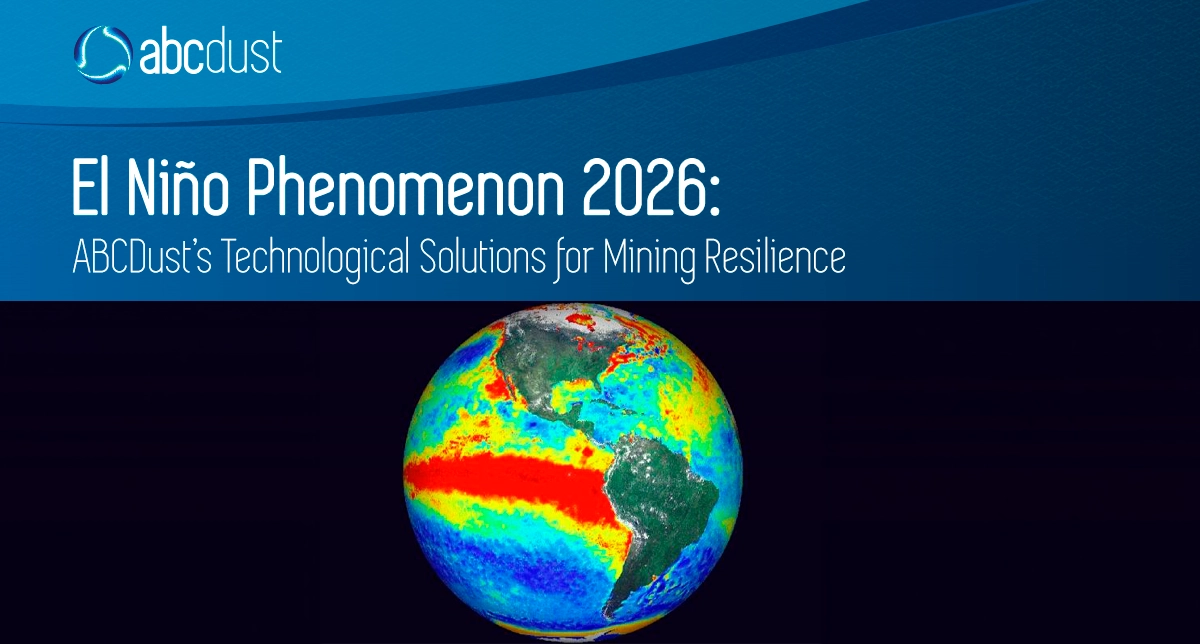
In this scenario, the development of the El Niño phenomenon during the 2026–2027 period emerges as an immediate destabilizing factor for value chains and operational continuity in mining districts across South America.
For its part, the Climate Prediction Center of the National Oceanic and Atmospheric Administration [NOAA] (2026), in its El Niño-Southern Oscillation (ENSO) Diagnostic Report, notes that conditions associated with the phenomenon are expected to intensify and persist throughout the Northern Hemisphere winter and Southern Hemisphere summer (2026–2027).
Climate Change and Its Regional Impact
The interaction between global warming and El Niño intensifies instability. The rise in average temperature accelerates the evaporation of surface water, rapidly negating the moisturizing effect of rainfall and giving way to periods of extreme environmental drought.
In Chile in particular, the Meteorological Service links this cycle to a significant rise in minimum temperatures and concentrated, short-duration rainfall in highly vulnerable areas of the Cordillera and the foothills.
Climate Risk Matrix for the Chilean Mining Industry (2026–2027)
| Area / Facility | Main Risk | Critical Operational Impact |
|---|---|---|
| Norte Grande & Salt Flats | Summer rains on the Altiplano, thunderstorms, and changes in the water balance. | Traffic restrictions on logistics routes for reagents (sulfuric acid), changes in evaporation rates in lithium ponds, and impacts on camps. |
Atacama, Coquimbo, and the Central Region | Short-lived heavy rains, a high zero isotherm, and rising minimum temperatures. | Floods, landslides, severe erosion of industrial roads, collapsed drainage systems, and disruptions to the transport of concentrates on mountain roads. |
Tailings and Landfills | Soil saturation, surface runoff, and unusual hydraulic pressure. | Slope instability in open-pit mines, risk of mass movement, and geotechnical failures. This requires the highest level of vigilance in contingency plans. |
Adapted from “Super Niño: The Climate Risk That Could Strain Roads, Safety, and Operational Continuity in the Chilean Mining Industry,” by Cristian Recabarren Ortiz (2026), Digital Minera Magazine
This critical situation requires companies to adopt advanced soil stabilization and emissions control methods that do not rely on constant watering.
Operational Vulnerabilities and Economic Impact on Mining Operations
Extreme weather events affect the viability of mining projects at four critical operational levels:
1. Geotechnical Challenges in Open-Pit and Underground Mining
The geotechnical stability of open-pit excavations requires rigorous instrumentation systems to monitor slopes and safety berms. Water saturation of the rock mass reduces soil cohesion, which can lead to large-scale failures.
In underground mining, priorities focus on preventing the uncontrolled inflow of runoff into the tunnels, which necessitates oversizing pumping stations and critical maintenance of ventilation systems.
2. Hydraulic Pressure in Tailings and Dump Sites
Heavy rainfall exerts unusual hydraulic pressure on the crests of tailings dams and perimeter diversion channels.
Furthermore, accelerated erosion of the slurry and saturation of the dump sites increase the likelihood of landslides and the seepage of contaminants into local aquifers.
3. Occupational Health Risks and Social License to Operate
During dry seasons, traffic on mining roads generates high concentrations of particulate matter (PM10 and PM2.5). This problem is exacerbated in the case of tailings, whose wind-borne emissions are often laden with heavy metals and highly toxic chemicals such as arsenic, lead, silica, and cyanide.
Wind-borne dust exposes workers and neighboring communities to severe respiratory diseases, directly threatening the social license to operate (SLTO).
4. Logistical and Financial Impact
The blocking of a mining road by flash floods or landslides prevents shift changes, disrupts the supply of critical materials (fuel, spare parts, lime), and halts the transport of concentrate to ports.
For a medium- or large-scale operation, the resulting cost overruns are catastrophic. Net financial losses are estimated at between $8 million and $12 million for each day of downtime.
For these reasons, investing in road stabilization and waterproofing technologies is becoming an established strategic mitigation decision.
ABCDust Solutions: Innovation in Road Stabilization, Dust Monitoring, and Control
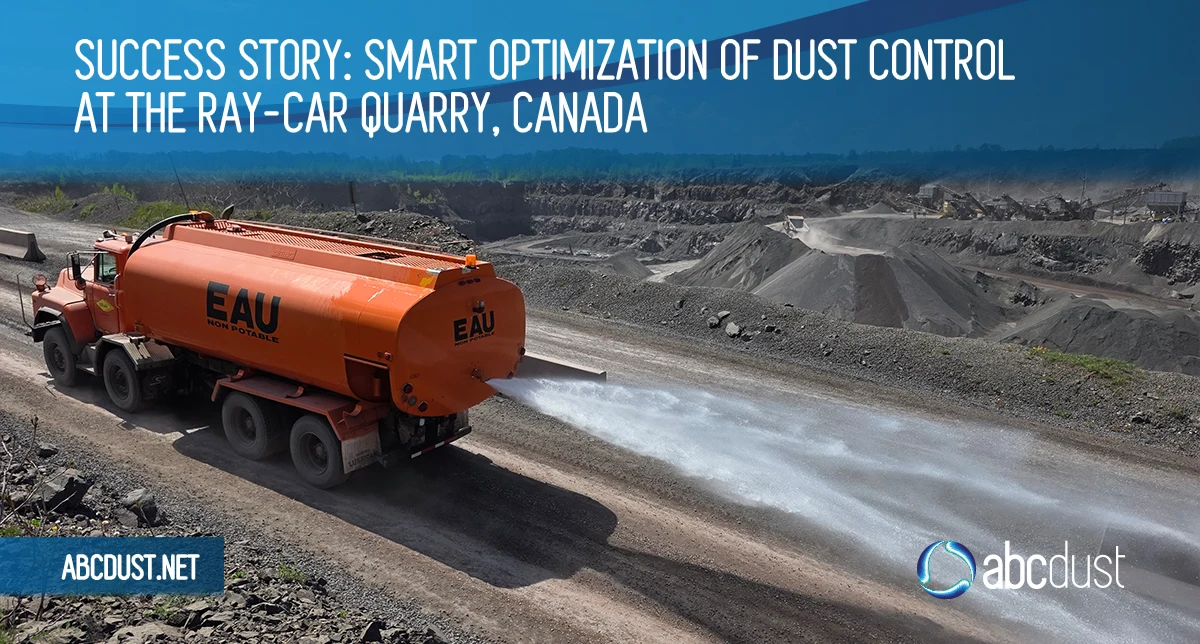
The conventional method of irrigating industrial roads exclusively with water is unsustainable and ineffective. The rapid evaporation of water requires continuous irrigation cycles, driving up water consumption and CO₂ emissions due to the constant use of water tankers.
Furthermore, excessive water application causes fine-grained material to be washed away, leading to potholes, structural deformations, and a risk of hydroplaning on ramps with gradients greater than 10%.
To address these issues, at ABCDust we have developed a family of additives, polymers, and enzymes designed to stabilize soils, waterproof roadways against heavy rain, and suppress dust emissions with minimal water consumption.
Our solutions are certified under the Canadian ecotoxicological standard BNQ 2410-300, guaranteeing their environmental safety and compliance with the industry’s ESG standards.
ABCDust Technology Portfolio
Ionic and enzymatic soil stabilizers for road subgrades
Our CHEM-STAB® and EZISS PRO® solutions consolidate the physical foundation of roads against excess moisture, preventing the formation of mud and landslides during heavy rains, which reduces the cost overrun associated with mechanical grading by 75%.
Polymeric Suppressants and Binders for the Wearing Course
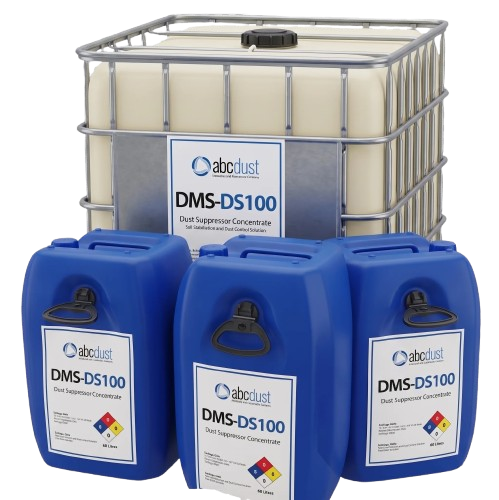
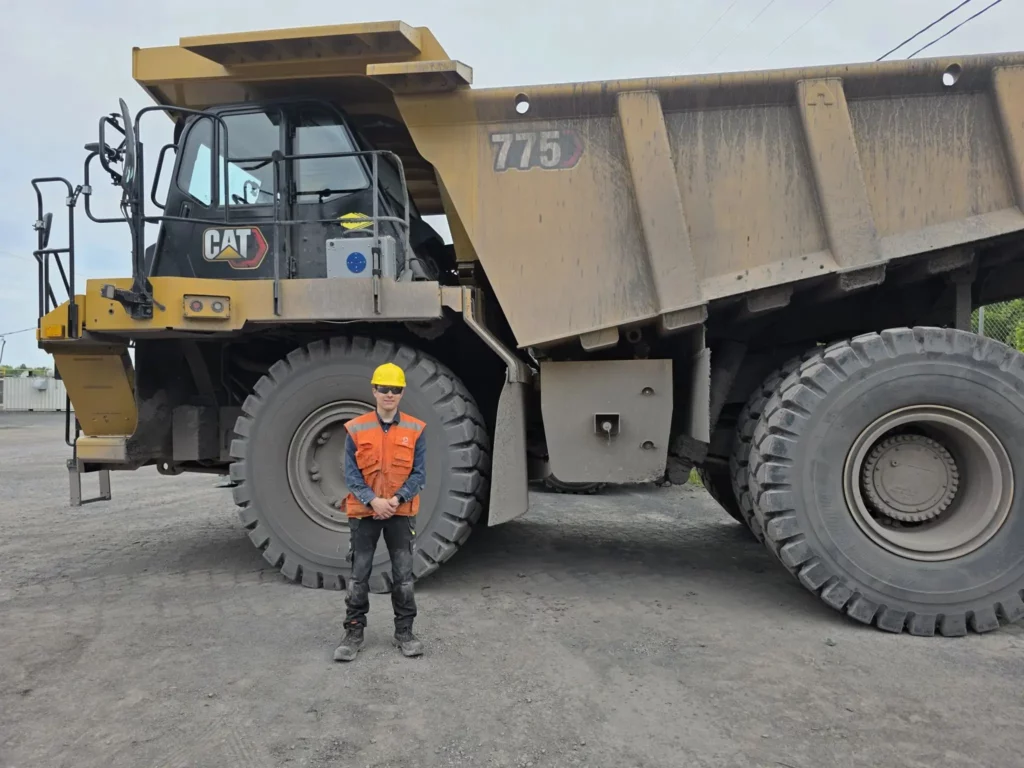
The DMS-DS® (versions 100, 90, 80) and DMS-EB® products reduce water consumption by 90% and increase tire traction on steep slopes by up to 82%, mitigating the risk of CAEX truck collisions caused by excessive moisture.
Emissions Control at Stockpiles and Tailings Ponds
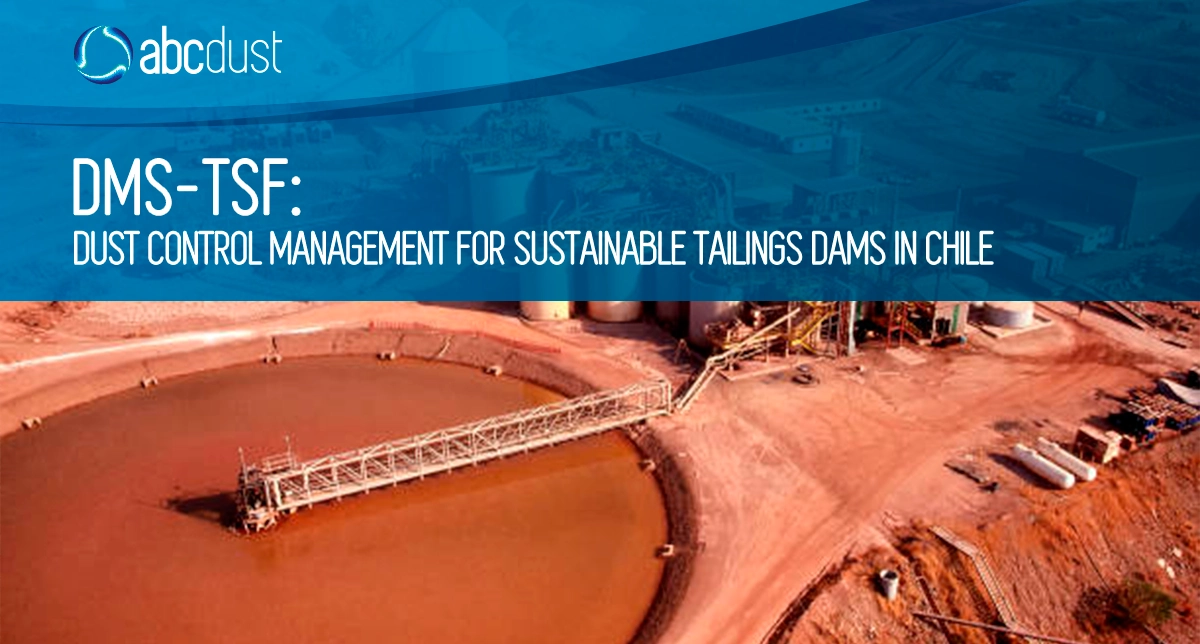
The water-soluble, biodegradable polymer DMS-TSF® (Tailings Storage Facilities) forms an elastic, hydrophobic crust that prevents the spread of toxic dust during dry, windy periods, while also protecting the slopes of tailings ponds from severe erosion caused by extreme storms.
Mitigation at Crushing Plants and Conveyor Belts
Implementation of high-efficiency systems using three key technologies adapted for high-friction areas: DMS-TDS®, DMS-Fog®, and DMS-Cannons®.
Smart Dust Management: IoT Monitoring and the DMS-ONE Platform
To prepare for the challenges of El Niño 2026, we are centralizing environmental and logistics management by integrating georeferenced sensors and physical instrumentation (Red-Box®, Bluebox®, DMS-AQS®).
Through the DMS-ONE platform, the system processes this data to provide unprecedented predictive control:
- 3D Heat Maps: Mathematical models generate three-dimensional, dynamic representations of roadways in real time.
- 14-Day Weather Forecast: By cross-referencing historical data with satellite projections, the platform accurately calculates soil drying rates and expected emissions.
- Operational Optimization: It enables optimal scheduling of irrigation shifts and precise dosages of additives before pollution peaks or road degradation occurs.
Toward Resilient Mining
An analysis of projected climate patterns associated with the El Niño phenomenon calls for the immediate implementation of chemical stabilization technologies and smart instrumentation.
Is your operation prepared for the climate challenges of the 2026–2027 period? Contact us so we can work together to design a mitigation strategy tailored to your site and ensure operational continuity.
References
National Oceanic and Atmospheric Administration [NOAA] Climate Prediction Center. (June 11, 2026). El Niño-Southern Oscillation (ENSO) Diagnostic Report. National Oceanic and Atmospheric Administration. https://acortar.link/V88RTF
Recabarren Ortiz, C. (May 17, 2026). “Super Niño”: The Climate Risk That Could Strain Roads, Security, and Operational Continuity in Chilean Mining. Revista Digital Minera [REDIMIN]. https://acortar.link/zLvLL6
World Economic Forum. (2026). The Global Risks Report 2026, 21st Edition. Insight Report. WEF Report. https://acortar.link/NpBtp2