
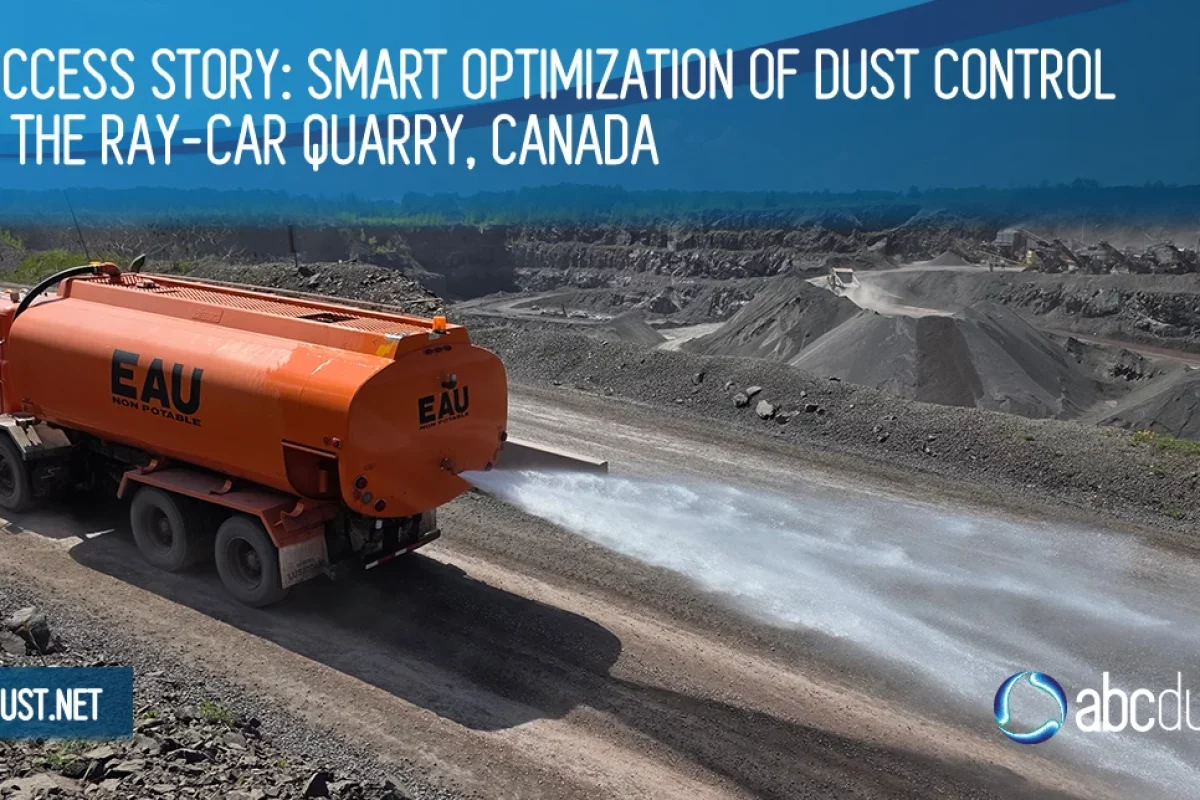
In the mining and quarrying industry, emissions control is a matter of environmental compliance and a critical factor for operational safety and profitability.
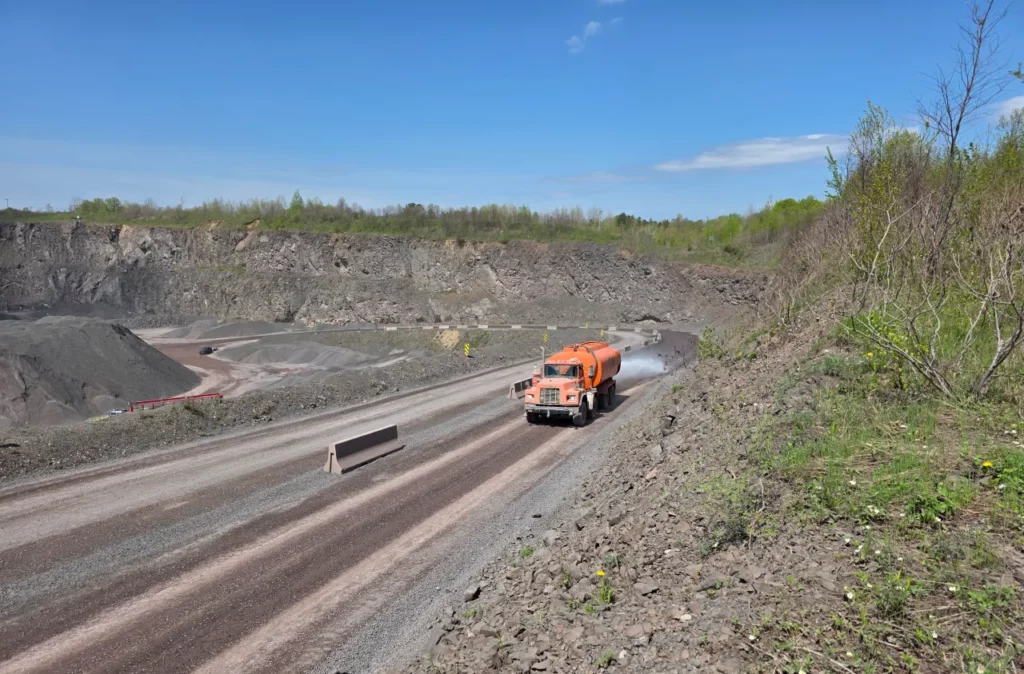
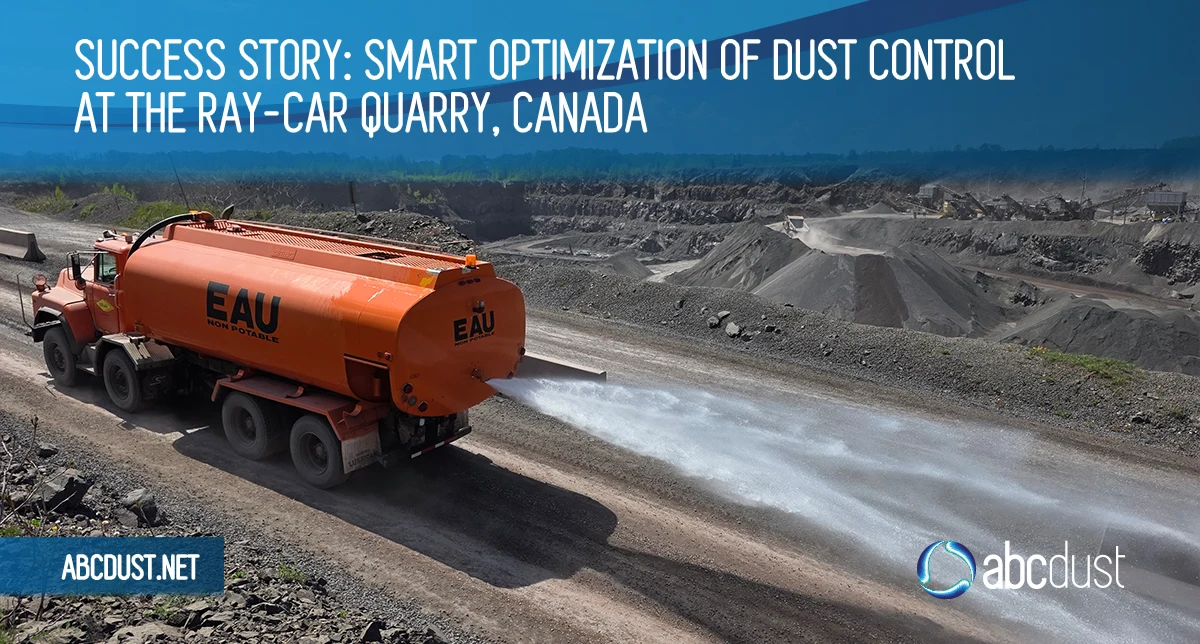
During the summer of 2025, we partnered with Ray-Car Quarry in Saint-Flavien, Québec, to transform the management of its main access ramp using a solution that integrates advanced chemistry and digital monitoring.
The Challenge: High Traffic Density and Critical Visibility
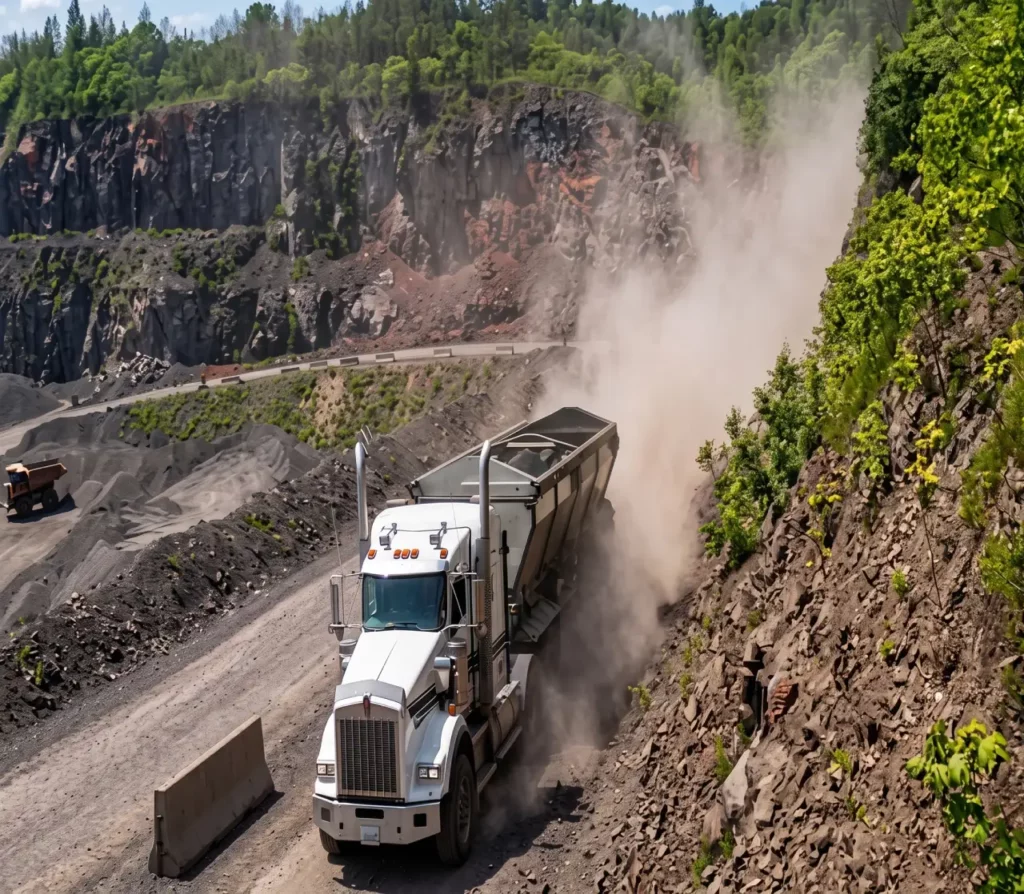
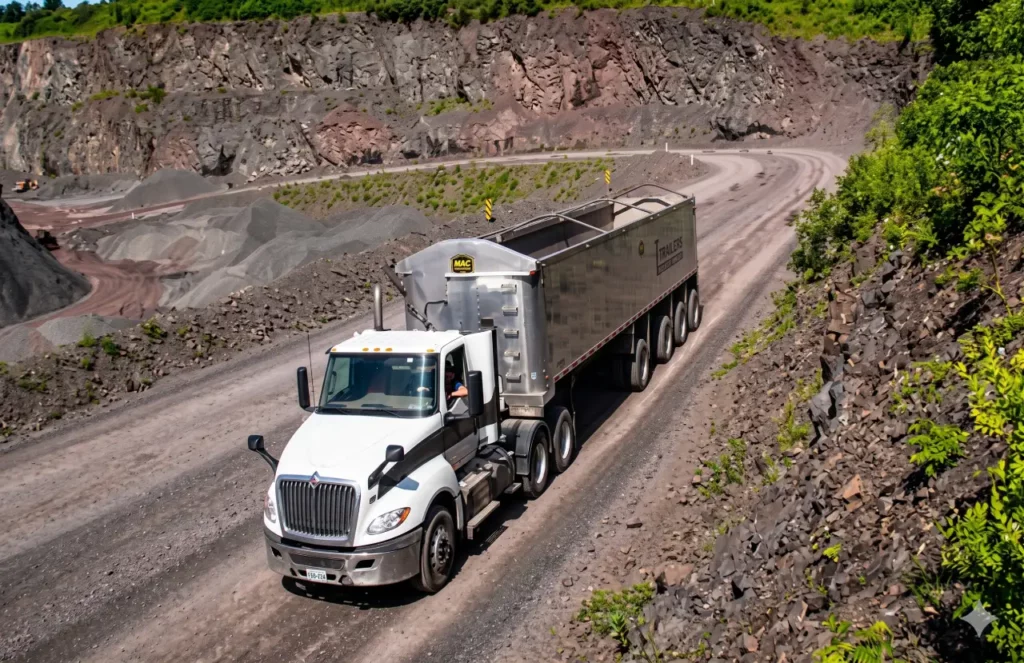
Ray-Car’s main ramp presented extreme operating conditions:
- Traffic Frequency: 2 to 3 heavy-duty vehicles per minute.
- Terrain Geometry: Steep inclines that increased engine strain and, consequently, the suspension of fine dust.
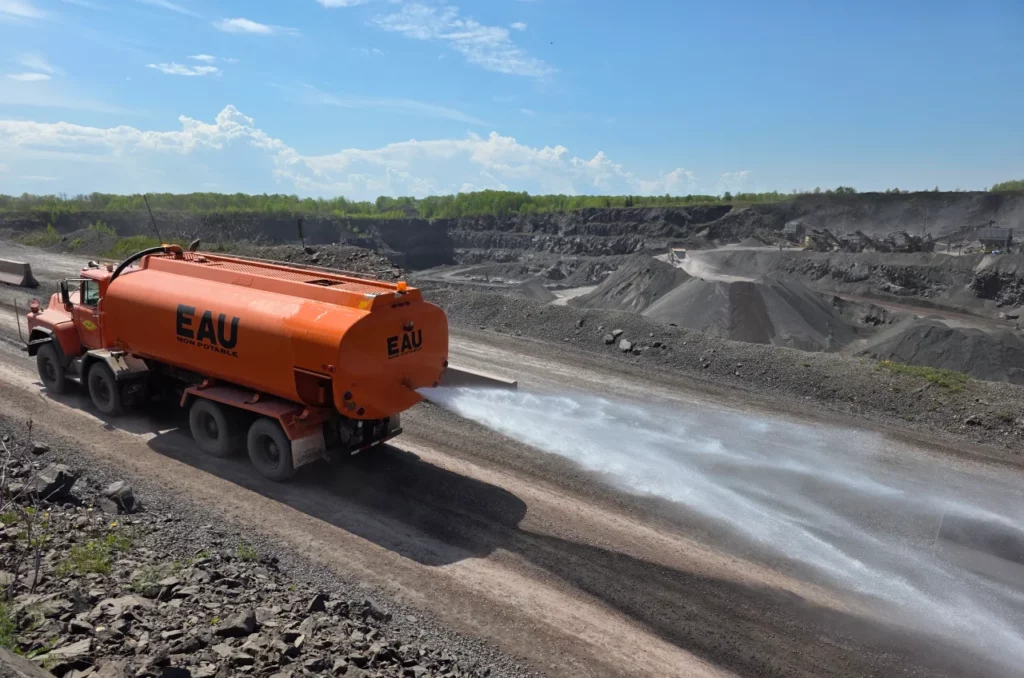
- Reactive Operation: A watering cycle of up to 8 passes per day that caused premature pavement erosion and high maintenance costs.
Prior to the intervention, measurements using the EPA’s OTM 34 methodology yielded concentrations of 18.1 mg/m³, a level that seriously compromised visibility and road safety.
The Solution: Dust Control Engineering (DMS-DS + DMS-ONE)
To address this challenge, we implemented a two-pronged strategy: chemical stabilization and digital monitoring.
DMS-DS Dust Suppression Technology
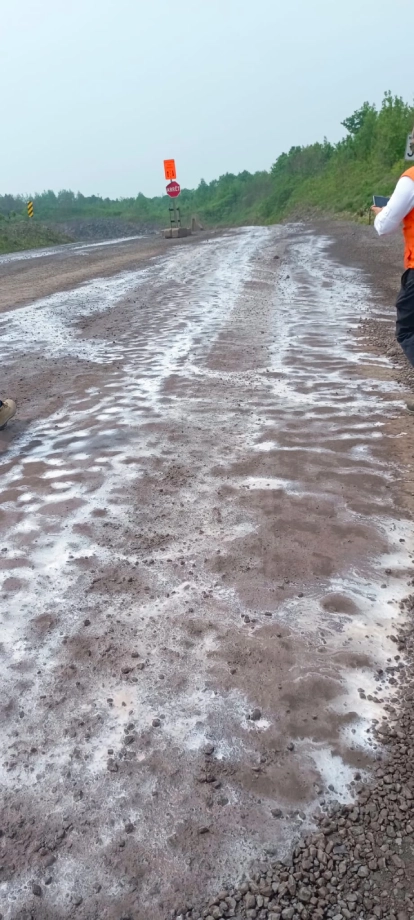
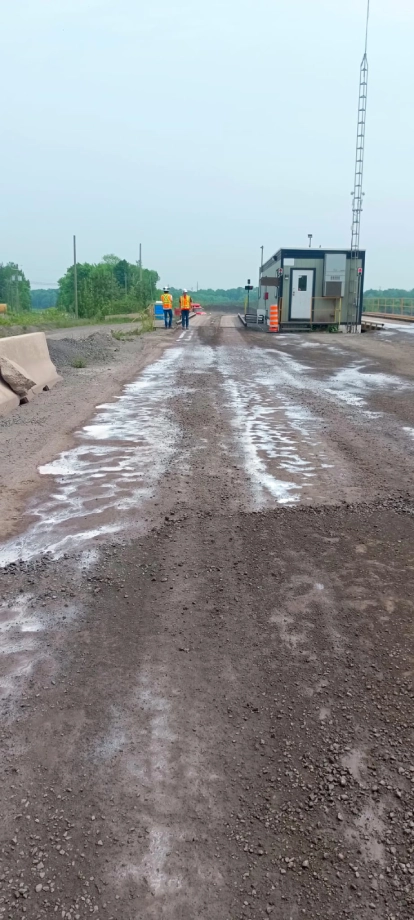
5,000 liters of the high-performance DMS-DS dust suppressant were applied. Unlike spraying with plain water, this additive creates a polymer matrix that seals fine particles, allowing the road to remain compact and dust-free even on sunny days (24 °C and no rain for 72 hours).
Real-time scientific monitoring
To ensure evidence-based results, an advanced technological ecosystem was deployed:
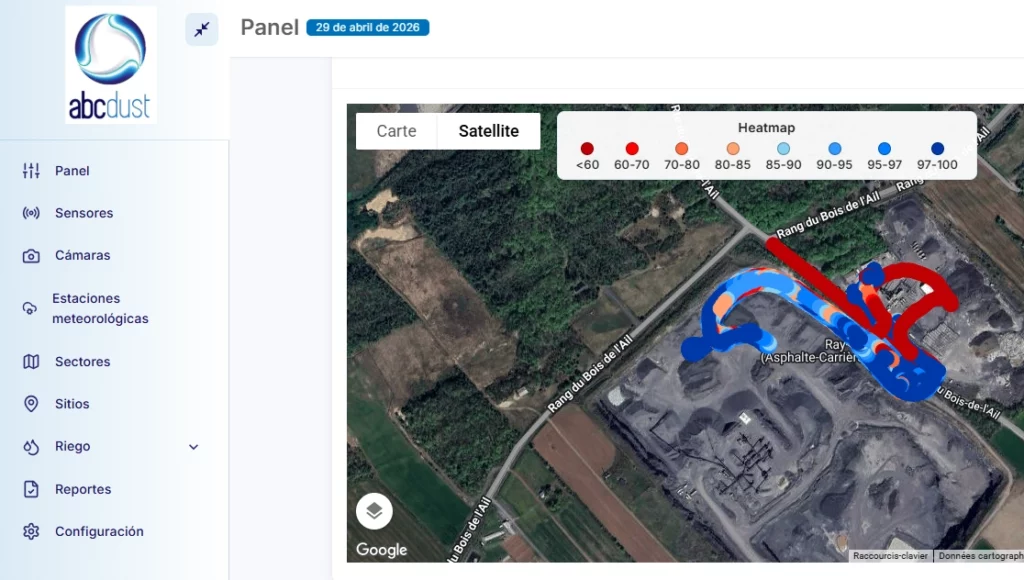
- Dusttrak 8530 TSI sensors: Equipped with GPS and accelerometers to map PM10 emissions with laser precision.
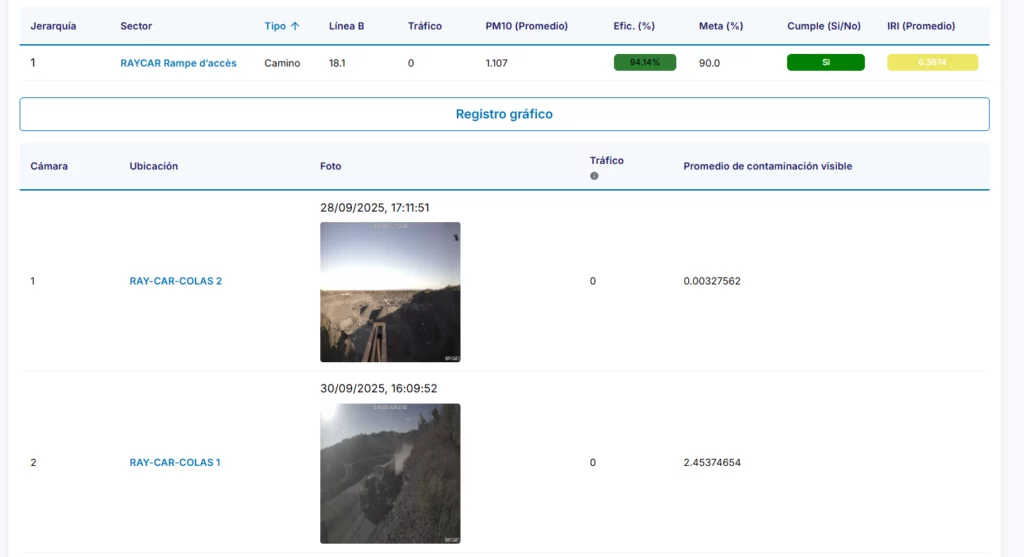
- DMS-ONE platform: Solar-powered 4G LTE cameras that, using Artificial Intelligence algorithms, calculate the percentage of visible dust and generate daily pollution heat maps.
The work method was based on the technical rigor of the OTM 34 (EPA) methodology, beginning with the measurement of a baseline using laser sensors and video cameras.
Following the application of the DMS-DS suppressor, 12 monitoring sessions were conducted under critical emission conditions to audit performance.
Results: Data That Transforms Operations
Technical collaboration between Ray-Car staff and our specialists allowed us to adjust the maintenance schedule without interrupting production. The final results exceeded industry standards:
The dramatic reduction in emissions from 18.1 to 0.063 mg/m³ confirms that strict operational procedures combined with the right technology can eliminate visibility problems on critical ramps.
| Indicator | Before | With ABCDust | Impact |
|---|---|---|---|
| Dust emissions | 18,1 mg/m³ | 0,063 mg/m³ | -95,13% |
| Water consumption | 100% | 25% | -75% savings |
| Irrigation cycles | 8 passes/day | 2 passes/day | Logistical efficiency |
| Road condition | High erosion | Stabilized | -50% Maintenance |
Projections for 2026
The success of the pilot project on the main ramp has laid the groundwork for widespread adoption throughout the quarry for the 2026 summer season. The full integration of the DMS-ONE monitoring system will allow Ray-Car not only to control dust but also to anticipate pollution hotspots using predictive data.
This transition toward smart mining ensures an operation that is:
- Safer: Full visibility for operators.
- Sustainable: Massive reduction in the water footprint and erosion control.
- Cost-effective: Extended service life of the road surface and reduced operating costs.
With this project, at ABCDust we reaffirm our commitment to being the leading strategic partner in the digitization and optimization of emissions for the heavy industry in North America.
Are you looking to optimize the efficiency of your mine roads? Contact us for a technical assessment of your operations.