
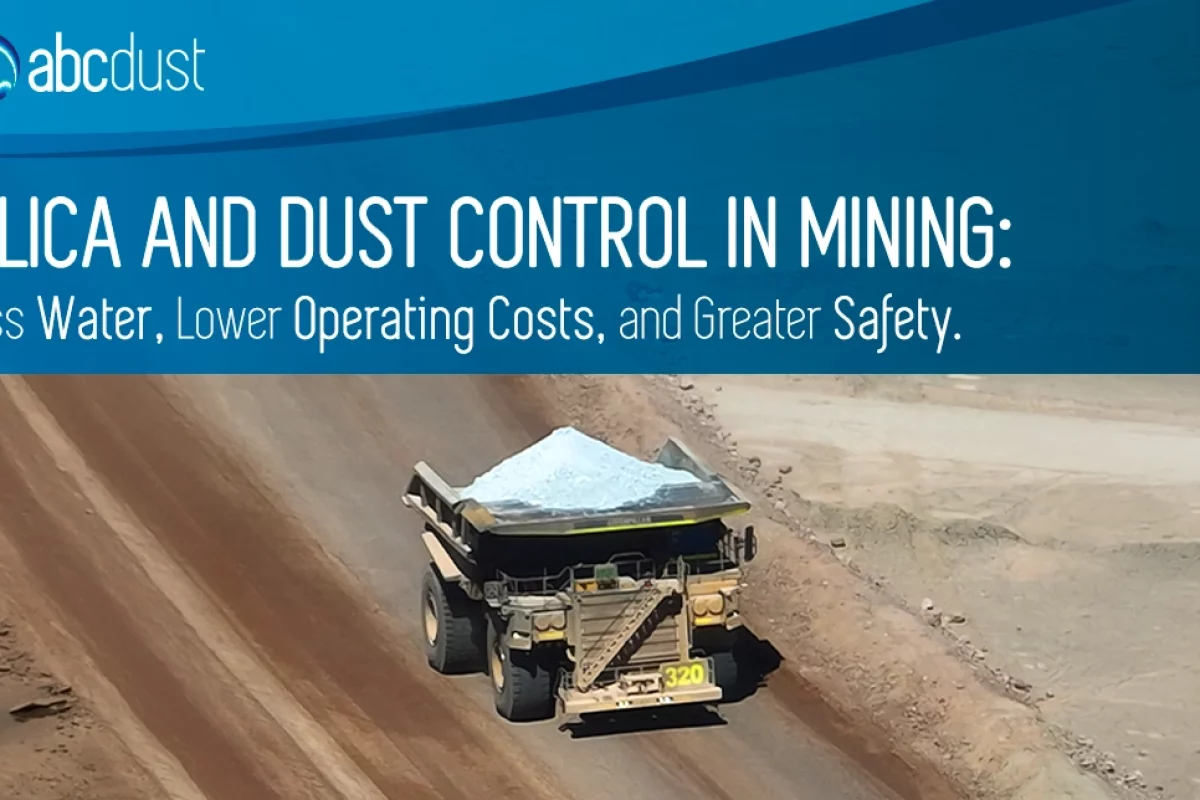
How an integrated dust suppression and road stabilization strategy reduces respirable silica exposure, optimizes water use, and improves operational continuity.
Dear clients, partners, and industry friends:
As the first quarter of 2026 comes to a close, mining faces growing pressure to operate with greater efficiency, lower resource consumption, and higher safety standards. The start of the dry season, sustained increases in energy and fuel costs, and rising regulatory demands regarding occupational health and environmental performance are redefining on‑site priorities.
In this context, dust control can no longer be treated as an isolated task. Today it is a strategic decision that simultaneously impacts people’s health, operating costs, road safety, water availability, and operational continuity.
The industry needs solutions that do more than mitigate visible dust. It needs technologies capable of acting on critical emission sources, reducing exposure to respirable silica, lowering water consumption, and protecting the integrity of mine roads.
1. Occupational health: controlling the right dust in the right place
Not all dust carries the same risk.
In mining, unpaved roads may contain significant levels of silica depending on the wearing course material and the site’s lithology. However, most dust raised by traffic consists of coarse particles that primarily affect visibility, road safety, and surface deterioration.
In contrast, areas such as crushing, transfer, loading, and discharge pose a much more critical occupational risk, because they generate a finer, respirable fraction that can enter the pulmonary system and accumulate over time. That is why exposure to respirable crystalline silica remains one of the most significant challenges in mining occupational health.
The conclusion is clear: reducing dust in general is not enough; it is necessary to differentially control the sources that generate the highest respirable exposure.
That is why our solutions combine:
- intelligent misting cannons,
- dry fog systems,
- localized suppression at critical points,
- and real‑time monitoring with IoT sensors,
enabling emission spikes to be detected and automatic protocols to be triggered before workers are exposed to critical levels.
This approach can reduce emissions at loading, discharge, and transfer points by up to 95%, preventing fine dust from migrating into cabs, walkways, travel routes, and work areas.
2. Less water, more efficiency: an environmental and economic advantage
For years, many operations tackled dust by increasing watering frequency. Today we know that approach is not always sustainable or efficient.
The water used for dust control not only has a supply cost. It also involves:
- water collection or purchase,
- pumping,
- transport,
- energy consumption,
- wear and tear on water trucks,
- and increasing logistics costs in large‑scale operations.
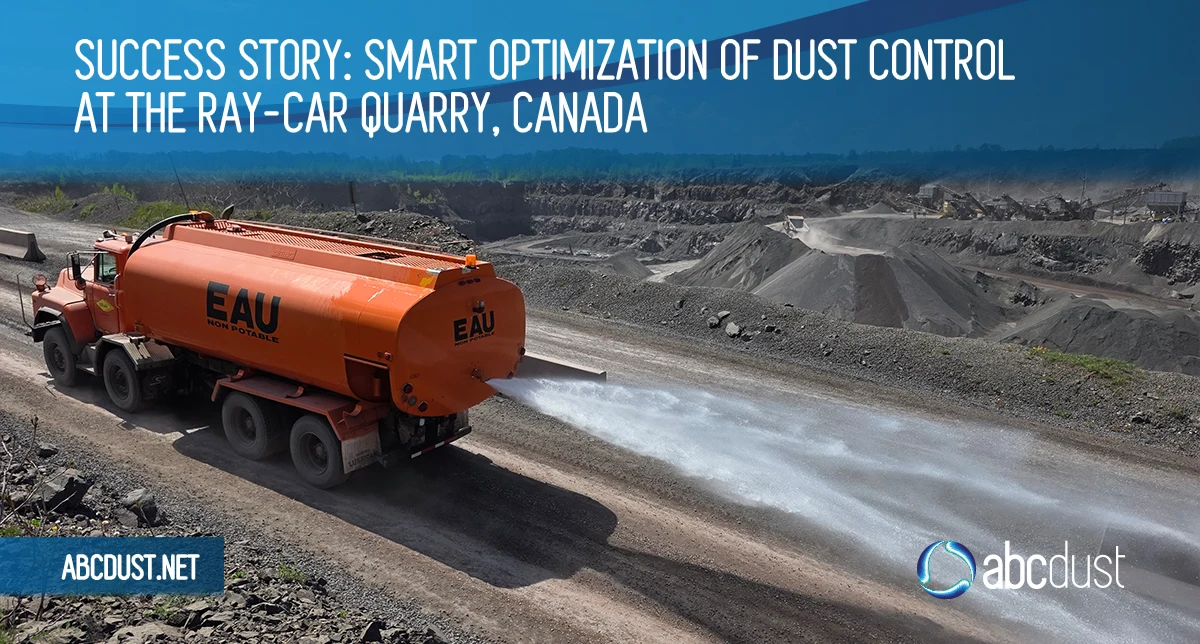
Added to this is a problem that is often underestimated: excessive watering degrades roads.
When a wearing course receives more water than necessary, it loses surface stability, softens, increases rutting, and accelerates the loss of fines. This forces more maintenance interventions, more re‑shaping, and more use of motor graders, again raising OPEX.
In other words, over‑watering not only increases the operation’s water footprint; it also raises the total road maintenance cost.
Therefore, solutions that save water have a double strategic impact:
- they reduce the site’s water footprint, and
- they lower the costs associated with water transport and premature road deterioration.
Our solutions can reduce water consumption by up to 92%, maintaining wearing course stability and controlling dust without loss of stabilized material.
3. OPEX under control: less wear, less fuel, more continuity
Inefficient dust management silently but steadily consumes budget.
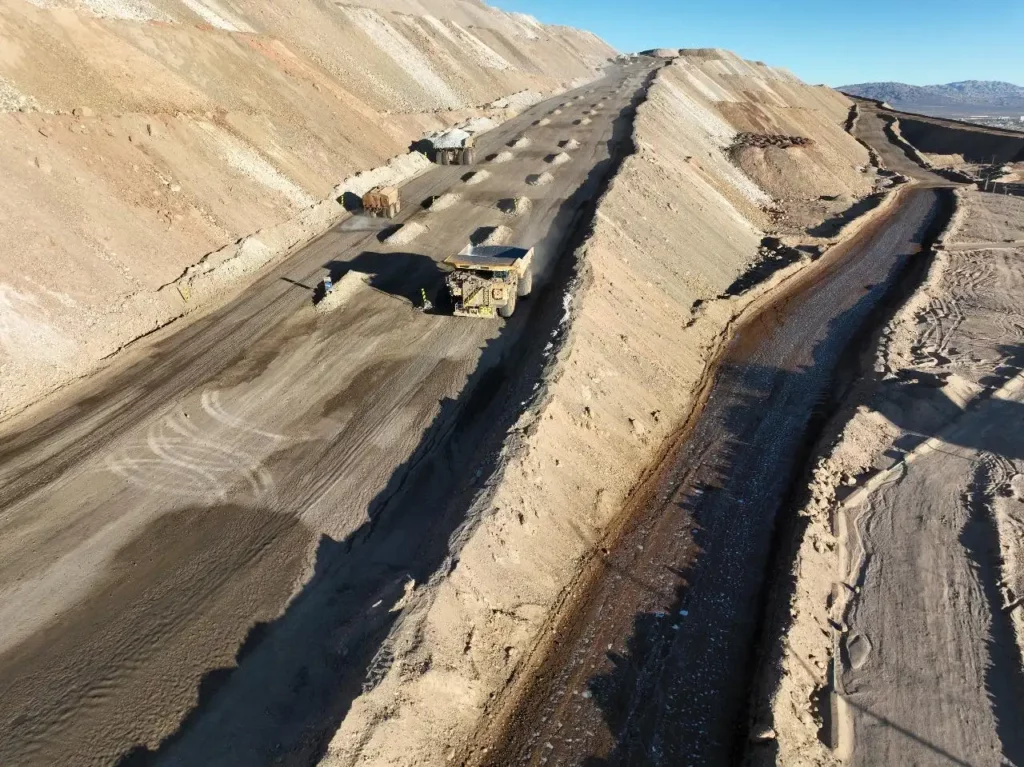
An unstable wearing course increases wear on tires, suspensions, steering components, and braking systems. It also raises fuel consumption, maintenance frequency, and downtime for critical equipment.
With integrated stabilization and dust control strategies, including the use of DMS‑DS® additives, it is possible to:
- extend tire life by 20% to 35%,
- significantly reduce the loss of fines,
- reduce the frequency of road interventions,
- and improve operational efficiency on high‑traffic routes.
Additionally, replacing motor graders with industrial sweepers for certain maintenance tasks can reduce fuel consumption by 50% to 70%, decreasing surface disturbance and secondary resuspension of fine dust.
4. Road safety: controlling dust without compromising traction
In mining, a dust‑free road is not enough if it does not provide safe travel conditions.
Effective dust control must simultaneously ensure:
- good visibility,
- surface stability,
- adequate friction,
- and safe braking performance, especially on ramps and curves.
Following international references and technical performance audits, our solutions ensure that braking distance with stabilizing additives is equal to or less than with traditional water spraying. Thus, the operation maintains safe conditions even for high‑tonnage equipment under extreme demands.
This makes it possible to move toward a more mature management of mine roads: management that does not separate safety from productivity but integrates them.
5. A new standard for the dry season
The dry season demands more precise technical decisions.
The most efficient operations are no longer limited to controlling dust when it appears. They are moving toward a preventive approach, where suppression, monitoring, road stabilization, and water optimization are all part of a single operational strategy.
That is the new standard:
- protect people from exposure to respirable silica,
- reduce water consumption and transport,
- decrease road deterioration due to over‑watering,
- lower maintenance costs,
- extend tire life,
- and improve operational continuity.
Is your operation ready for the end of the semester?
Dust and silica exposure do not let up. Neither does the pressure to reduce costs, save water, and operate more efficiently.
Today more than ever, a well‑designed technical strategy can make the difference between a reactive operation and a robust, safe, and competitive one.
Contact us today to schedule an assessment of your roads, transfer points, and crushing areas, and to project your savings and operational improvements for the close of 2026.