
Haul roads and ramps
91–98% suppression of PM10 and PM2.5 with DMS-DS® in the water truck's water
Book a meeting
On haul roads and ramps, the DMS-DS® suppressant is dissolved in the water truck's water. Efficiency is computed against a baseline measured on the same section.
At a glance
- On haul roads and ramps
- DMS-DS® in the water truck's water
- PM10 and PM2.5 suppression (DMS-DS®)
- 91–98%
- Braking distance
- 35–82% shorter than with watering alone
- Water savings
- up to 90%
- Tested on
- ramps of up to 16% with 600 t trucks
- Measurement on roads
- TSI DustTrak II 8530 · EPA OTM 34
- DMS-DS® certification
- BNQ 2410-300, certificate no. 4192
- Additive packaging
- 1,000 L drums or IBC totes
- Management platform
- DMS-ONE®
Source: DMS-DS® technical data sheet.
- suppression of PM10 and PM2.5 on roads with DMS-DS®
- 91–98%
- less watering water
- up to 90%
- shorter braking distance than with watering alone
- 35–82%
Two emission sources, two ways to treat them
The road emits along kilometers, every time a tire passes. The loading front emits at a single point, every time the shovel moves material.
- Haul roads and ramps
- Heavy, continuous traffic, 10 to 15% grades, loose soils with a fine fraction. The running surface is treated with additive in the water truck.
- Loading fronts
- Shovels and loaders working without pause, fine material disturbed on every pass, trucks and personnel next to the source. The air at the loading point is treated with long-range mist.
As an order of magnitude, hauling contributes around 40% of a mine site's dust and loading around 10%. These are indicative values; each site's baseline replaces them with the values measured there.
Loading fronts are treated with long-range fog cannons: see the loading fronts sheet.
Haul roads and ramps: additive in the water truck
On ramps with 10 to 15% grades, dust is not only an environmental issue: it reduces the operator's visibility and lengthens the braking distance of a loaded truck.
- Watering with water alone
- Watering with a water truck erodes the running surface instead of stabilizing it. The water evaporates and the passes have to be repeated several times a day.
- Water with DMS-DS®
- The additive binds fine particulate matter and improves the friction of the running surface. Each application adds a microlayer on top of the previous one.
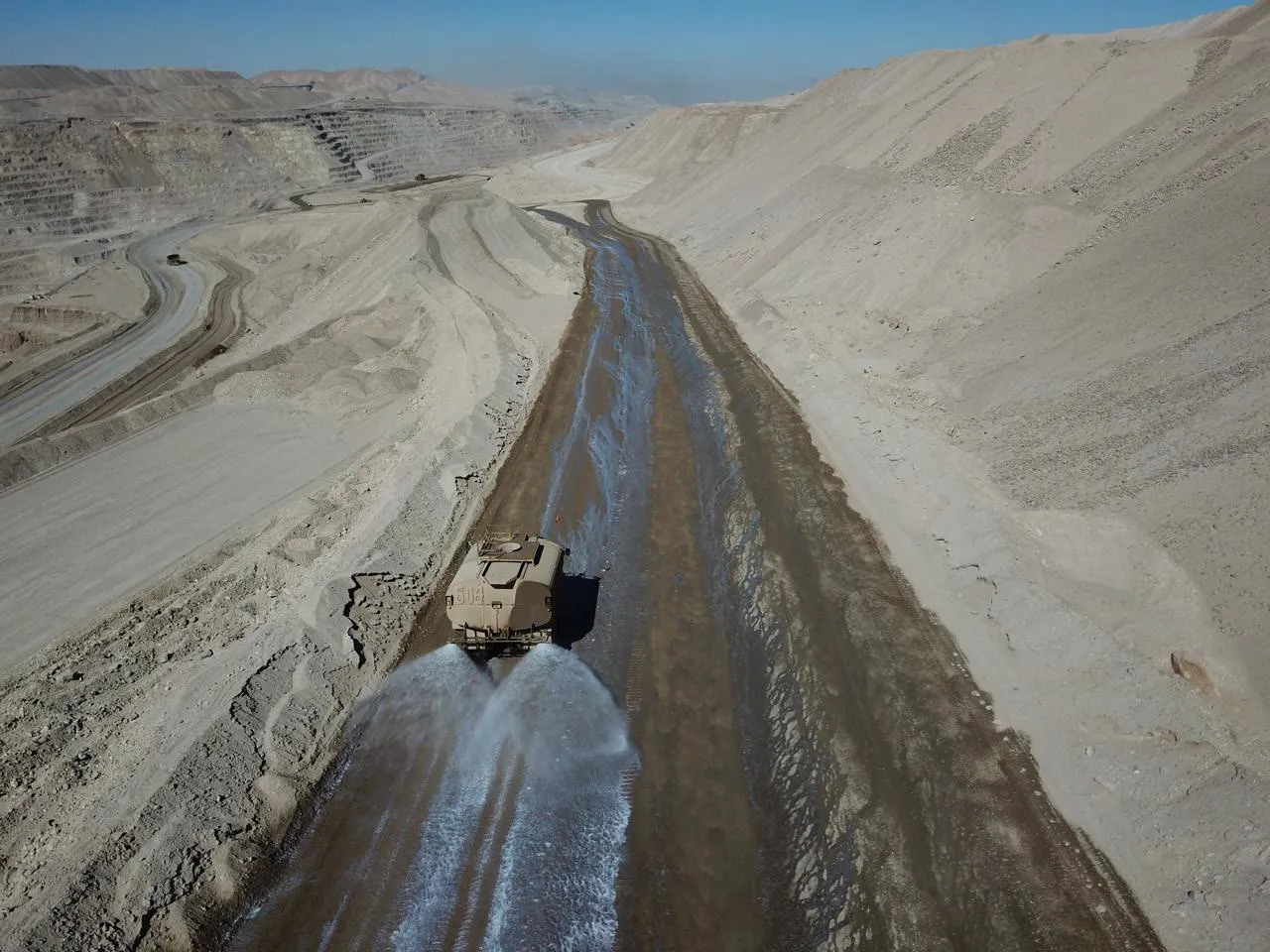
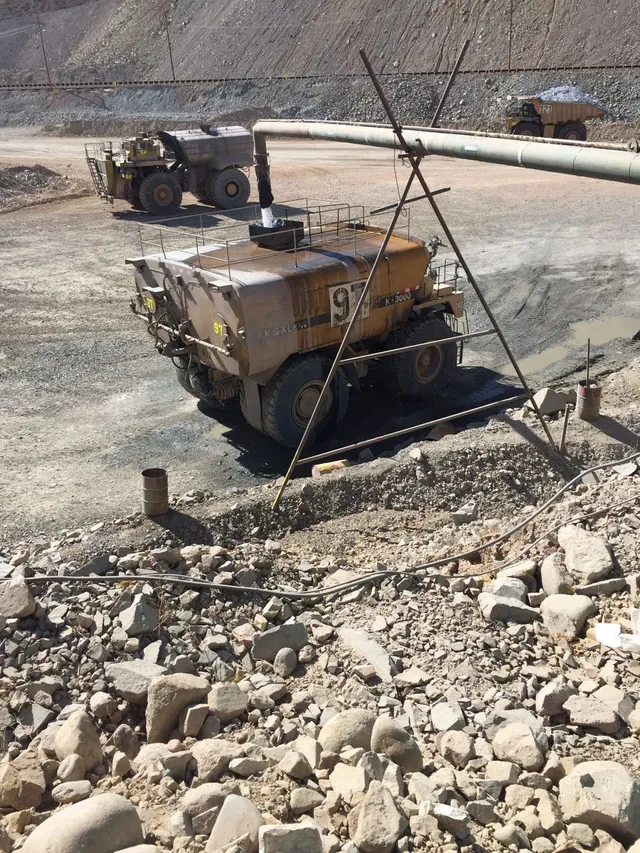
Water truck applying on a ramp. 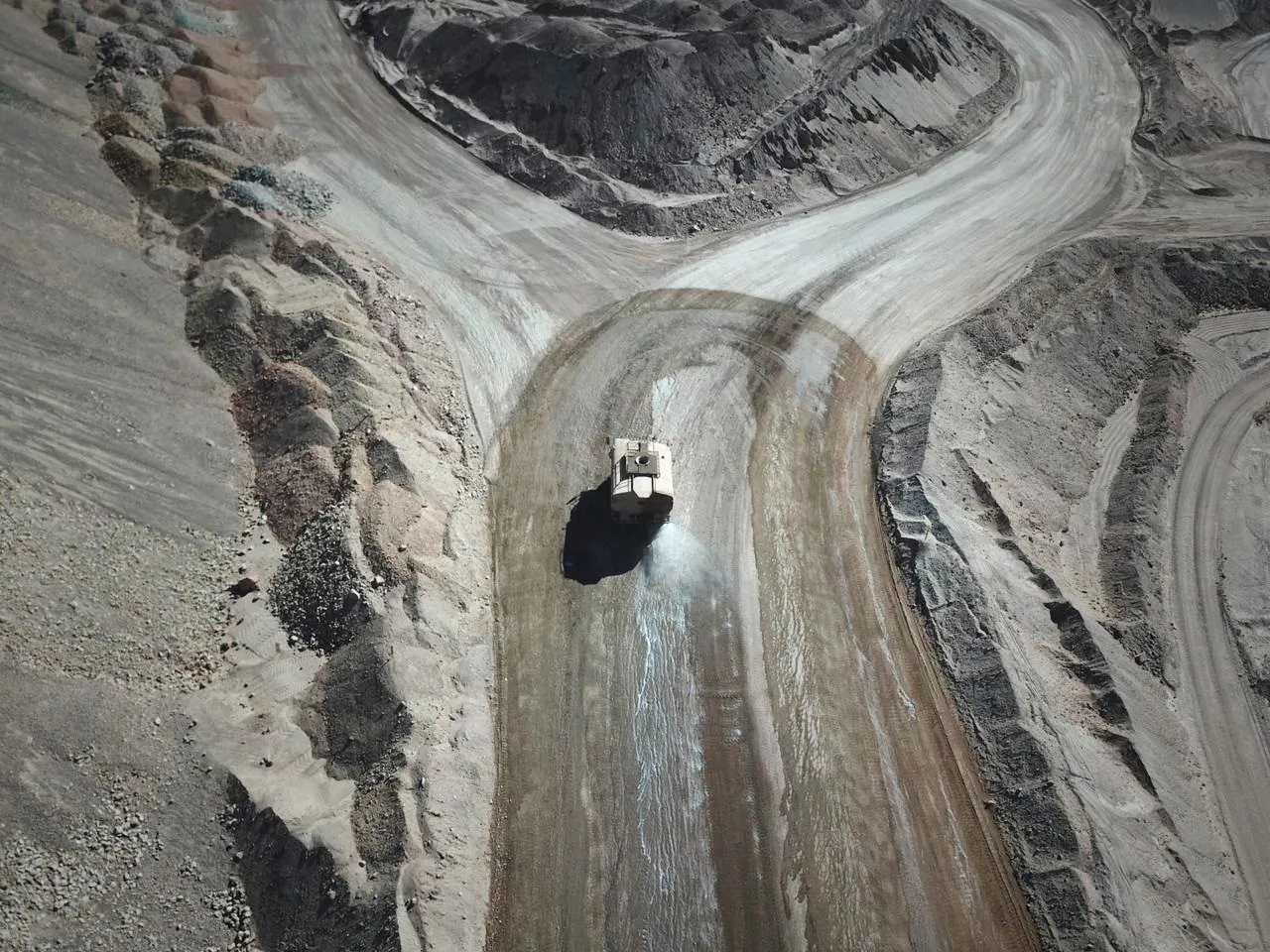
Application at a haul road junction.
How it is applied
DMS-DS® is a proprietary blend of 0.25 µm nanopolymers. It is applied with a water truck.
- 01
It is added to the water truck loaded with water
The highly concentrated additive goes into the tank and mixes with the watering water.
- 02
The road is watered, topically or mixed in
DMS-DS® allows both forms of application: on the surface or mixed into the running layer.
- 03
The microlayers build up with each application
The foam forms microlayers that overlap one another. The product dries clear, without staining, and resists water, UV radiation, and acidic or alkaline water.
ABCDust's technical team defines the dose and the reapplication frequency for each site, according to soil type, traffic and climate.
What changes on the road
91–98%
Less PM10 and PM2.5
Suppression efficiency of DMS-DS® on dust raised by traffic.
35–82%
Shorter braking distance
Compared with the same road wetted with water only. It also reduces the risk of skidding and hydroplaning.
up to 90%
Less watering water
Which also lowers the cost of watering and of maintaining the running surface.
16%
Tested on steep ramps with 600 t trucks
DMS-DS® was tested on ramps with grades of up to 16% with 600-tonne loaded haul trucks. Under those conditions it shortened braking distance by 35–82%.
no. 4192
BNQ 2410-300 certificate
It meets the standard setting ecotoxicological requirements for dust suppressants on unpaved roads; certificate valid from April 11, 2025 to April 30, 2027. The product is non-toxic, non-corrosive and non-ionic.
What is supplied for the road
Three additives according to the type of road, plus the instruments and the platform used to verify the result.
- DMS-DS®Suppressant · nanopolymer
- For haul roads, ramps, high-altitude sites and high-tonnage hauling. 91–98% of PM10 and PM2.5, braking 35–82% better than with watering alone, and up to 90% less water. Also used on underground mine roads. Shelf life of 12 months.
- DMS-80®Low-cost suppressant and stabilizer
- For mine, agricultural and industrial roads, with ultra-low chloride levels. PM10 and PM2.5 suppression of 85–90%, water savings of 60–90%, cold resistance down to −30 °C. Maintained with one or two waterings a month under heavy traffic and one every four months under light traffic.
- DMS-DS 100®Soil stabilizer
- A soil stabilizer that is also used on haul roads and ramps: it reduces dust by up to 85–95%, uses at least 80% less water and makes the effect last 4 to 5 times longer than water alone. Details in Soil stabilization.
- InstrumentsRed-Box®, BlueBox®, V-Sense, Motion
- Red-Box® and BlueBox® for PM10 and PM2.5; V-Sense and Motion for friction and braking distance; IRI for road roughness.
- DMS-ONE®Platform
- Heat maps by road condition, historical and real-time values, historical weather data and a 14-day forecast, and a record of water and fuel savings.
How a road section is measured
A pickup truck drives the section at constant speed with the monitor's probe behind the rear tire, where the dust is raised. The same pass is repeated on the untreated road, which is the baseline, and on the treated road.
Our approach
Monitor → Treat → Optimize
A measured baseline, treatment at the source, and verification against that same baseline.
- 01
Monitor
Fixed and GPS-equipped mobile sensors, cameras with computer vision, weather stations and reference gravimetric sampling. The baseline for each section and each front is established first.
- 02
Treat
An hour-by-hour dust risk index built on the forecast, watering scheduled by road segment, an optimal route, execution through the operator app, and remote control of the equipment in the field.
- 03
Optimize
Suppression efficiency computed against the baseline, adherence to schedule, actual water and additive against plan, and road regularity. Exportable report.
What we are asked most
Do we have to change the water truck or stop traffic?
DMS-DS® is added to the water truck loaded with water, mixed and applied with that same truck. Traffic does not need to be interrupted.
Does the treated road become slippery?
On the contrary: braking distance is 35–82% shorter than on a road wetted with water, and the risk of skidding and hydroplaning is reduced. It was tested on ramps of up to 16% with 600 t trucks.
How much water is saved?
Up to 90% with DMS-DS®, because the road needs fewer water truck passes.
How is effectiveness demonstrated on the road?
With a pickup truck at 40 km/h carrying the probe of a TSI DustTrak II 8530 behind the rear tire and driving sections of ≈ 200 m, under EPA OTM 34. Efficiency is computed against the baseline of the same section and reported by ramp and by area.
Tell us the soil, the traffic, the grades and the current watering
With that we propose the additive for your roads and the method by which the result will be measured against your baseline.
Request a haul road assessmentCases using this application
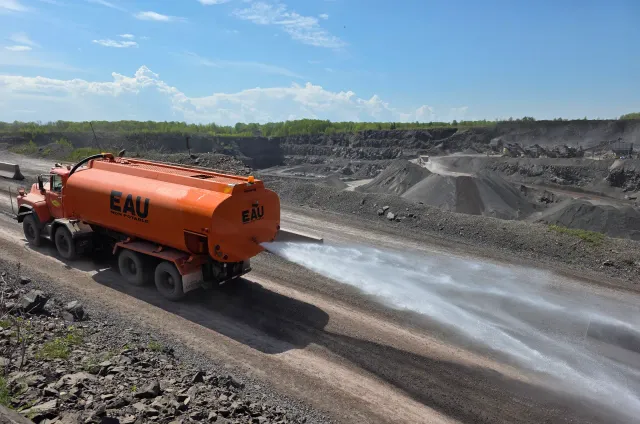
Ray-Car quarry · Canada
From 18.1 to 0.063 mg/m³ on the access ramp
Traffic of up to three vehicles per minute on a graded ramp, and up to eight tanker passes a day that eroded the road instead of stabilizing it.
- documented average suppression
- 95.13%
- documented average suppression
- less water used
- 75%
- less water used
- less road grading and repair
- 50%
- less road grading and repair
- water truck passes, down from 8
- 2 passes/day
- water truck passes, down from 8
TSI DustTrak 8530 — EPA-referenced sensorEPA OTM 34 · 12 capture sessions
Read the full case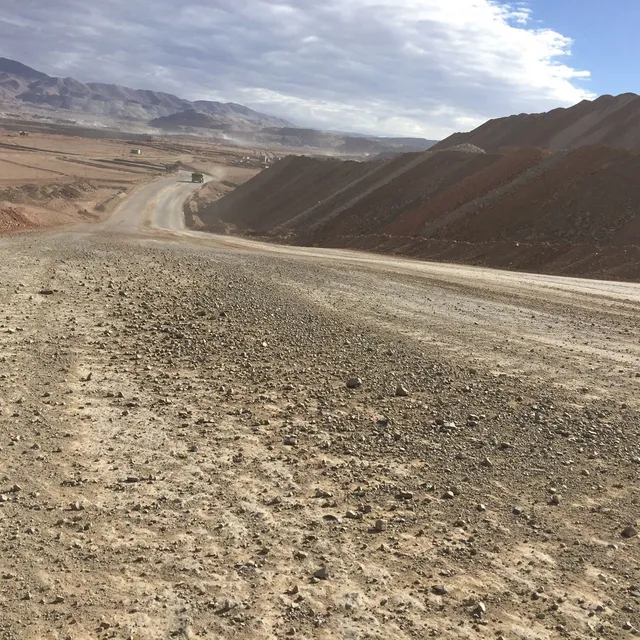
Codelco División Ministro Hales · Chile
91 to 98% suppression, after testing more than ten solutions from suppliers worldwide
Between 2016 and 2018 Codelco tested more than ten solutions from suppliers worldwide on ramps with 10 to 15% grades, measuring braking distance and suppression efficiency over one to two months per supplier.
- dust suppression
- 91–98%
- dust suppression
- water savings
- 80–90%
- water savings
- improvement in braking distance
- 32–80%
- improvement in braking distance
- more effective and economical than chloride salts
- 40–60%
- more effective and economical than chloride salts
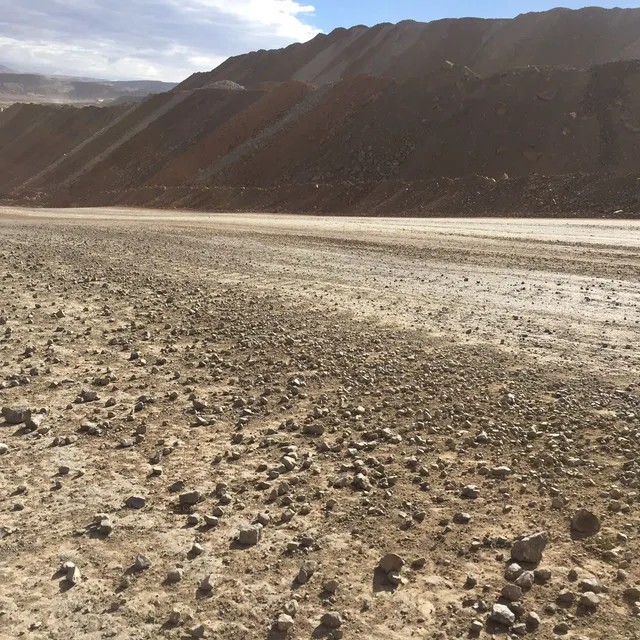
Codelco División Radomiro Tomic · Chile
The validation holds on 15% ramps
In 2018 Radomiro Tomic evaluated advanced dust control solutions on ramps with 15% grades. DMS-DS® arrived already validated at Ministro Hales and exceeded expectations, this time with the platform integrated.
- suppression of PM10 and PM2.5
- 91–98%
- suppression of PM10 and PM2.5
- maximum water savings
- 90%
- maximum water savings
- maximum improvement in braking distance
- 80%
- maximum improvement in braking distance
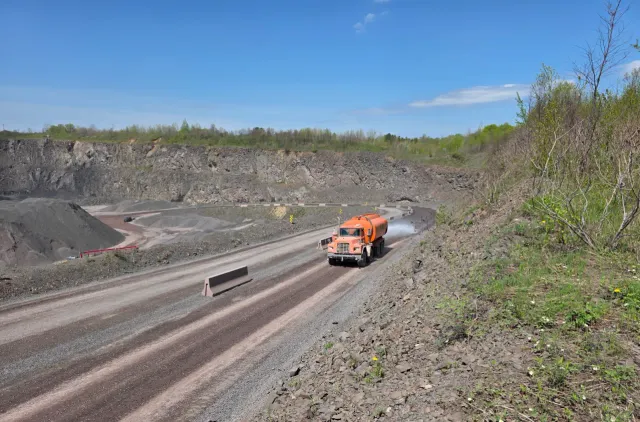
Vale · Brazil
91 to 98% less PM10 at the Mariana complex
Roads heavily exposed to dust, with low-efficiency daily watering (40 to 60% suppression) and excess water use equivalent to the monthly consumption of 36,000 people.
- reduction in PM10 emissions
- 91–98%
- reduction in PM10 emissions
- maximum water savings
- 90%
- maximum water savings
- avoided per year
- 12,500 t CO₂/yr
- avoided per year
EPA OTM 32
Read the full case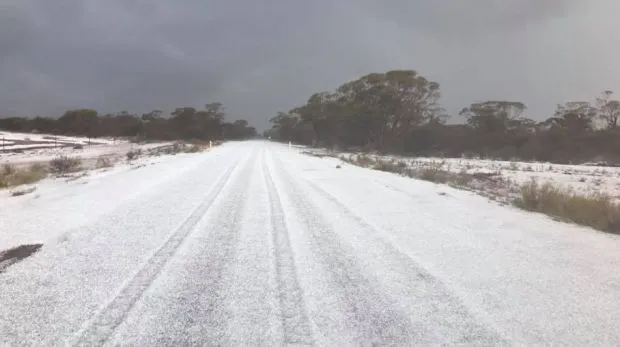
Hudbay Minerals · Canada
Up to 98% less visible dust in Manitoba
Dust control on the site roads with DMS-DS 100®. The site ended up cleaner, safer and needing less maintenance.
- maximum reduction in visible dust
- 98%
- maximum reduction in visible dust
- water savings
- 90%
- water savings
Southern Peru Copper Corporation · Peru
Awarded through an international tender
SPCC evaluated dust control solutions through an international tender. ABCDust was selected and the goals were met and exceeded: effective suppression, optimized water use, and better friction and traction for the haul trucks.
Read the full case
Big Stone Road · Canada
It paid for itself in 9 days, and held 48 without a water truck
A municipal road carrying 1,200 to 1,500 vehicles a day that required two water trucks and a grader day and night. DMS-90® was chosen because its cost is comparable to that of calcium chloride.
- for the application to pay for itself
- 9 days
- for the application to pay for itself
- without a single water truck or grader
- 48 days
- without a single water truck or grader
- vehicles before the first snowfall
- 50,000
- vehicles before the first snowfall