
Mining
Copper, gold, iron ore and coal. Haul roads, loading fronts, crushing, tailings and stockpiles: each point emits differently and is measured differently.
Book a meeting
Applications in this industry
Haul roads and ramps
On ramps with 10 to 15% grades, dust is not only an environmental matter: it reduces operator visibility and lengthens the braking distance of a loaded truck.
Crushers and conveyors
Emission concentrates at a few fixed points. As an indicative value, crushing contributes around 35% of a mine's fugitive dust.
Tailings storage facilities
Large dry tailings surfaces exposed to wind. The fine fraction carries respirable crystalline silica and metals, and the episode gives no warning: it depends on the wind.
Loading fronts
Emission concentrates at the loading point, where visibility governs safety. At a Chilean copper mine, long-range fog cannons with DMS-DS® additive reduced respirable dust at the loading front by 85%.
Stockpiles and dumping sites
Stockpiles, waste dumps and berms are untrafficked surfaces that the wind erodes every day. They are treated with a long-lasting crust and, where the wind is constant, protected with wind fences.
Cases in this industry
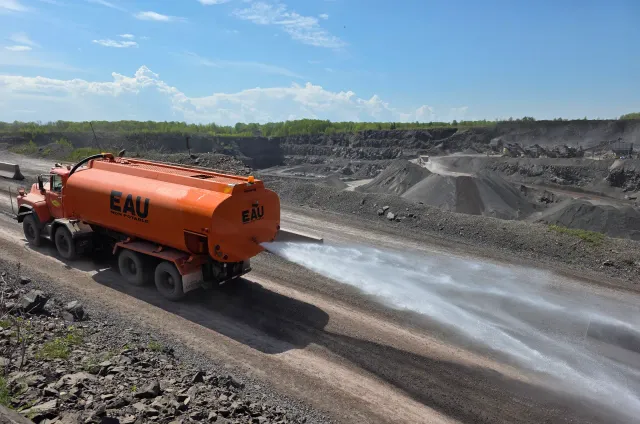
Ray-Car quarry · Canada
From 18.1 to 0.063 mg/m³ on the access ramp
Traffic of up to three vehicles per minute on a graded ramp, and up to eight tanker passes a day that eroded the road instead of stabilizing it.
- documented average suppression
- 95.13%
- documented average suppression
- less water used
- 75%
- less water used
- less road grading and repair
- 50%
- less road grading and repair
- water truck passes, down from 8
- 2 passes/day
- water truck passes, down from 8
TSI DustTrak 8530 — EPA-referenced sensorEPA OTM 34 · 12 capture sessions
Read the full case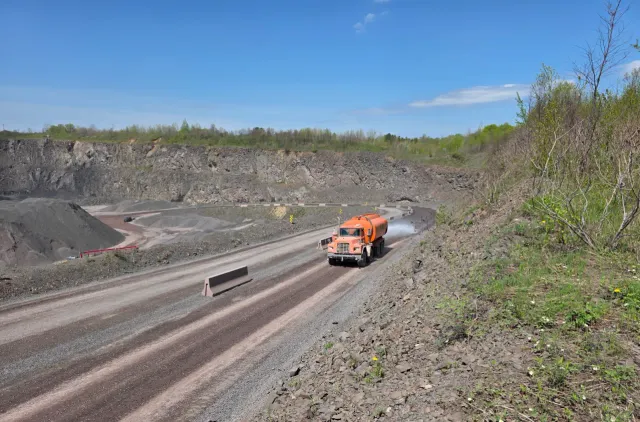
Vale · Brazil
91 to 98% less PM10 at the Mariana complex
Roads heavily exposed to dust, with low-efficiency daily watering (40 to 60% suppression) and excess water use equivalent to the monthly consumption of 36,000 people.
- reduction in PM10 emissions
- 91–98%
- reduction in PM10 emissions
- maximum water savings
- 90%
- maximum water savings
- avoided per year
- 12,500 t CO₂/yr
- avoided per year
EPA OTM 32
Read the full case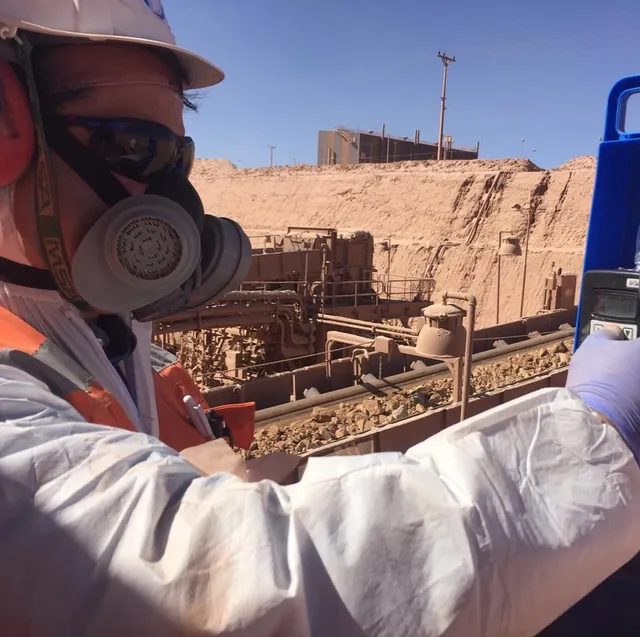
Minera Antucoya · Chile
Baseline first, then a 50 to 60% reduction
Secondary and tertiary crushing was the plant's main emission source. The R&D team deployed continuous monitoring and gravimetric sampling to establish a reliable baseline before intervening.
- short-term reduction in emissions
- 50–60%
- short-term reduction in emissions
- reduction target
- 90%
- reduction target
Red-Box® + BlueBox® — continuous monitoring validated against reference gravimetric sampling
Read the full case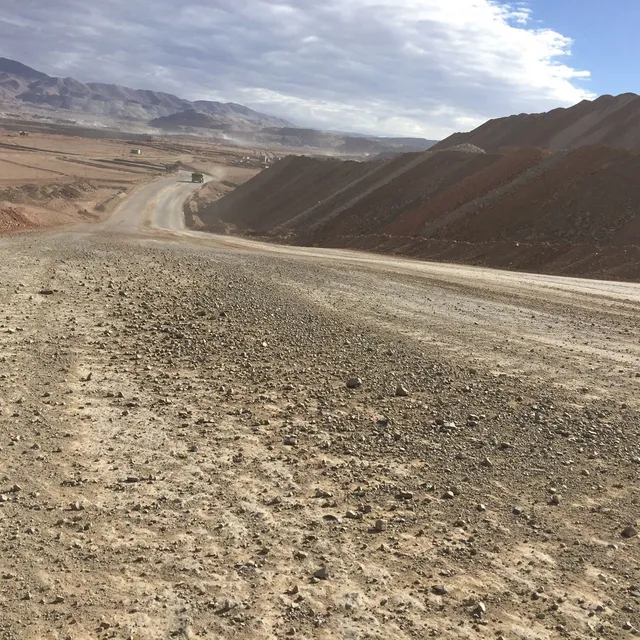
Codelco División Ministro Hales · Chile
91 to 98% suppression, after testing more than ten solutions from suppliers worldwide
Between 2016 and 2018 Codelco tested more than ten solutions from suppliers worldwide on ramps with 10 to 15% grades, measuring braking distance and suppression efficiency over one to two months per supplier.
- dust suppression
- 91–98%
- dust suppression
- water savings
- 80–90%
- water savings
- improvement in braking distance
- 32–80%
- improvement in braking distance
- more effective and economical than chloride salts
- 40–60%
- more effective and economical than chloride salts