
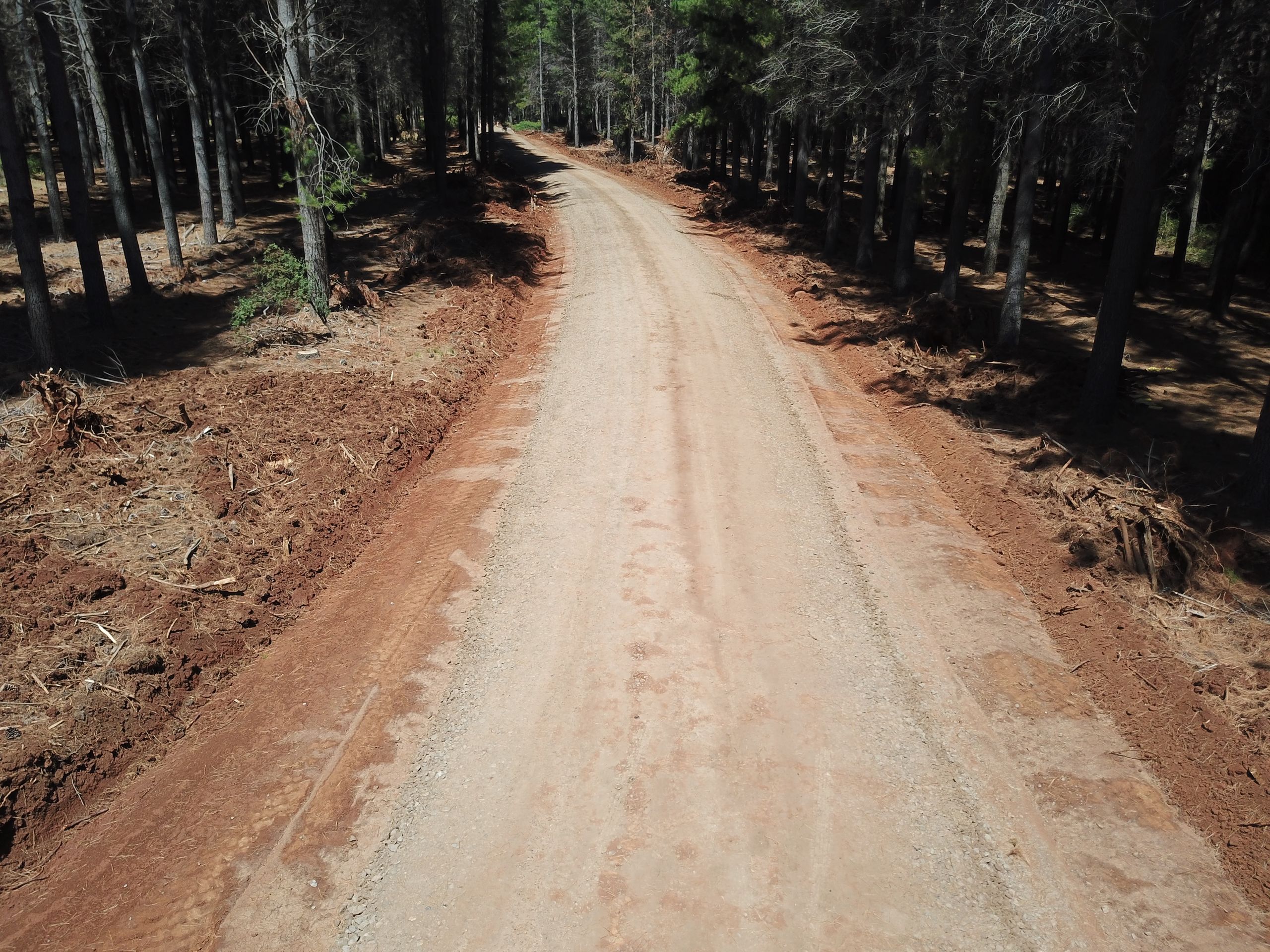
Soil stabilizers
Soil stabilizers for mine, forest and rural roads: DMS-DS 100®, ionic stabilizer, natural enzyme, bituminous emulsion and geocells. Less aggregate per kilometer and less maintenance. 5 entries in this category.
Stabilizing a soil means modifying it to improve its properties, its bearing capacity and its engineering performance: a solid foundation for roads, platforms, berms, embankments and slopes. There are topical, short-term solutions and mixed-in, long-term ones; which one applies depends on the soil type, the traffic and the climate.
At a glance
- What it solves
- potholes, deformation, aggregate loss and frequent grading
- Two ways to apply
- topical (short term) or mixed into the soil (long term)
- Where
- roads, platforms, berms, embankments and slopes
- Stabilized layer, DMS-DS 100® and CHEM-STAB®
- 20–25 cm
- Scarification with DMS-EB®
- 10–12 cm
- SOILCELLS® geocells
- cells 5–20 cm high and 10–40 cm in diameter
- Silty and clayey soils
- CHEM-STAB® with PI > 0; Eziss Pro with PI greater than 7 and less than 15
- Compaction with Eziss Pro
- smooth-drum or pneumatic roller of 15–20 t
- Quality control
- Proctor, Atterberg, PI, CBR, % fines, pH, shear, nuclear density gauge, IRI
Source: technical data sheets for CHEM-STAB®, Eziss Pro, SOILCELLS®, DMS-EB® and DMS-DS 100®, and ABCDust soil stabilization and haul road brochures.
- stabilized layer with DMS-DS 100® and CHEM-STAB®
- 20–25 cm
- life of the ionic stabilizer and the enzyme
- 12–36 months
- less granular material with geocells
- up to 50%
What stabilizing a soil means
It means modifying the existing soil to improve its properties and its bearing capacity. The aim is to leave a solid foundation for the works: a road, a platform, a berm, an embankment or a slope.
The solutions fall into two groups: topical, short-term ones, and mixed-in, long-term ones.
- Topical, short term
- The additive is added to the water truck, mixed with water and sprayed onto the surface, without scarifying. Product: DMS-DS®; DMS-DS 100® and DMS-EB® can also be applied topically.
- Mixed into the soil, long term
- The soil is scarified, watered with the additive, mixed and compacted again. Products: DMS-DS 100®, CHEM-STAB®, Eziss Pro, DMS-EB® and SOILCELLS® geocells.
How to choose: by soil type and by objective
The first decision depends on the soil: each additive is indicated according to soil type, its AASHTO classification and its plasticity index (PI). The second is the time frame: how long the intervention has to last.
- Clayey soilPI between 7 and 15
- Eziss Pro, a liquid enzyme. Indicated for soils with a PI greater than 7 and less than 15; the AASHTO soil type is verified before application. CHEM-STAB® (PI greater than zero) also covers this range.
- Silty or clayey soilPI greater than zero
- CHEM-STAB®, an ionic stabilizer. Indicated for silty and clayey soils with a PI greater than zero, which pose major challenges for permanent stabilization.
- Various soil typesincluding clayey
- DMS-DS 100®, a nanopolymer binder, on industrial roads, haul roads and well-compacted surfaces. DMS-EB®, a non-ionic bituminous emulsion, works with cationic and anionic soils and aggregates.
- Granular materialsoft soils and hard to compact soils
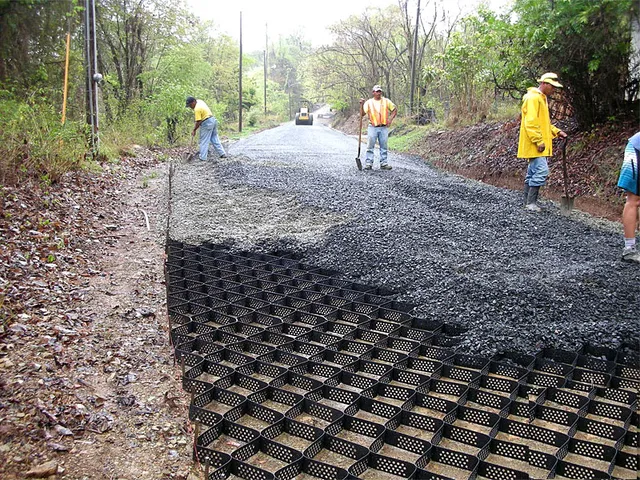
- SOILCELLS®. It confines granular material inside cells to prevent it from shifting. The process allows a stabilizing additive to be applied to the fill, if needed.
| Solution | Applications | Soils | Duration | Installation time |
|---|---|---|---|---|
| DMS-DS® · topical | Haul roads and stockpiles | All | 6–12 months | 7 to 10 days |
| DMS-DS 100® · topical or mixed in | Roads, platforms, berms and slopes | All, including clayey | 6–12 months | — |
| CHEM-STAB® · mixed in | Roads and slopes | Silty and clayey with PI > 0 | 12–36 months | 1 day |
| Eziss Pro · mixed in | Roads and slopes | Clayey, PI between 7 and 15 | 12–36 months | 1 day |
| SOILCELLS® · confinement | Roads and slopes | All | 60–120 months | 1 day |
PI > 0
The ionic stabilizer is indicated by plasticity
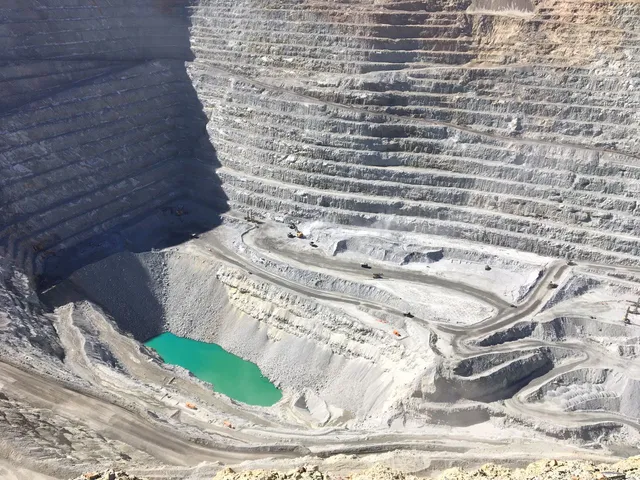
CHEM-STAB® releases the water held by chemical absorption on the soil particles and replaces it with more stable ions. It is indicated for silty and clayey soils with a PI greater than zero.
PI 7–15
The enzyme has a narrower window
Eziss Pro is used on soils with a PI greater than 7 and less than 15. That is why it is essential to verify the AASHTO soil type before application.
How each family works
Five different mechanisms. Four are liquid additives applied with water; the fifth is a structure.
- Ion exchangeCHEM-STAB®
- A sulphonated stabilizer. It changes the soil's hydrophilic property to hydrophobic: it releases the water held by chemical absorption on the particles and replaces it with more stable ions. As the bipolarity of the particles is cancelled, the spaces that water occupied shrink, and compaction and sealing do the rest. The result: optimum density, higher bearing value and a waterproofed soil.
- EnzymeEziss Pro
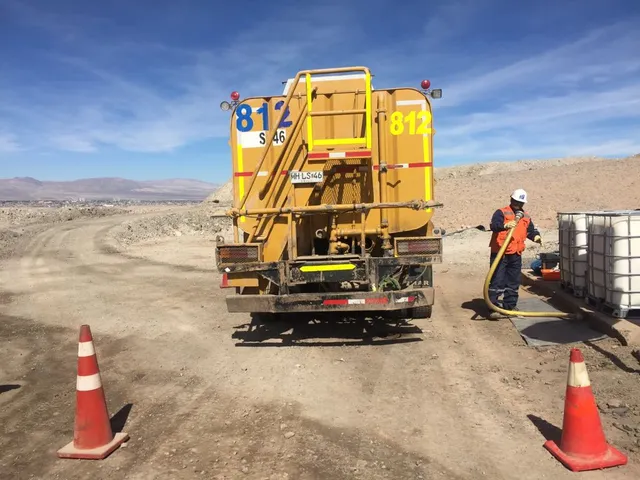
- A natural liquid enzyme. It permanently modifies the soil's water retention, which allows higher compaction densities, more strength and stability, and lower permeability to rain. It works on the native or local soil.
- Nanopolymer binderDMS-DS 100®
- Formulated with nanopolymers, surfactants and minerals. It binds the road materials and improves their overall strength; the effect is cumulative, because the bonding seal is reinforced with each application. The resulting surface resists erosion by wind, water and sun.
- Bituminous emulsionDMS-EB®
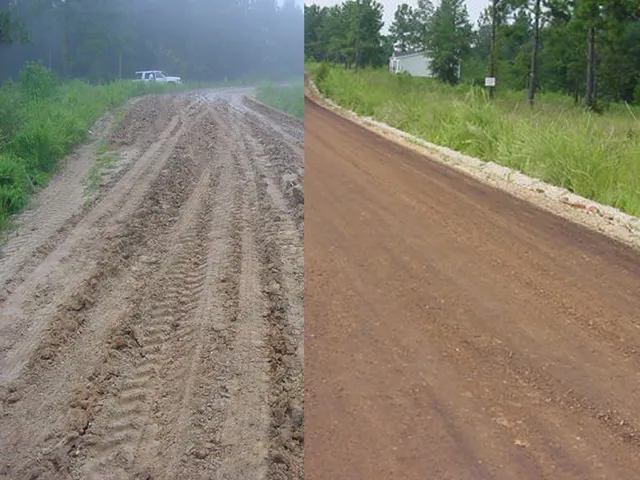
- Bituminous particles of 0.08 µm that bind the solids they come into contact with. Water is the carrier that infiltrates them into the surface. Non-ionic in nature, it includes surfactants that break the soil's surface tension and aid compaction. It waterproofs the road.
- Cellular confinementSOILCELLS®
- Panels of recycled high-density polyethylene. The three-dimensional structure of the cells confines the granular material and prevents it from shifting through erosion or under static or dynamic loads, without impeding the flow of water.
The construction sequence
A mixed-in stabilization is carried out with conventional road maintenance equipment. The CHEM-STAB® sequence has seven steps and requires a water truck, a compactor roller and an excavator.
- 01
Initial cleaning and shaping
The surface is cleaned and the road is given its profile before the layer is worked.
- 02
Scarifying
The soil is loosened to the depth to be stabilized. DMS-DS 100® and CHEM-STAB® stabilize a layer of 20–25 cm.
- 03
Soil additions, if needed
When the native soil does not meet the project requirements, it is corrected with borrow material before watering.
- 04
Watering with CHEM-STAB® and water
The additive is added to the water in the water truck. The dose is defined according to the soil's AASHTO classification.
- 05
Mixing and homogenizing
The soil and the additive are mixed until they are uniform through the full thickness.
- 06
Compaction with moisture and density control
The layer is compacted near optimum moisture and the density achieved is verified.
- 07
Final shaping and sealing
The road is given its final profile and the surface is sealed. The result depends on proper compaction and on sealing the surface.
Monitor → Treat → Optimize
How the result is verified
ABCDust works with standardized methodologies and guidelines, supported by testing and monitoring equipment.
- 01
Monitor: the soil before it is touched
Soil tests: Proctor, Atterberg limits, plasticity index, CBR, % fines, pH and shear strength.
- 02
Treat: the layer during the works
Moisture and density control during compaction (step 6 of the sequence). Density is verified with a nuclear density gauge.
- 03
Optimize: the road in service
IRI for road roughness, and braking and soil-moisture tests. V-Sense and Motion measure friction and braking distance. The records are analyzed for continuous improvement.
Two test reports are available: the UCS test by Chile's Laboratorio Nacional de Vialidad (2020), for DMS-DS® and DMS-DS 100®, and the TCLP test SQC-64050-1 (2021), for DMS-DS 100®. Braking and dust suppression figures for roads are in the haul roads and loading fronts sheet.
What we are asked most
What is the difference between a topical and a mixed-in application?
A topical application is sprayed onto the surface, without scarifying, and is a short-term solution. A mixed-in application requires scarifying, watering with the additive, mixing and compacting, and is a long-term solution. DMS-DS 100® and DMS-EB® allow both.
Which additive suits a clayey soil?
It depends on the plasticity index. CHEM-STAB® is indicated for silty and clayey soils with a PI greater than zero; Eziss Pro, for soils with a PI greater than 7 and less than 15. In both cases the soil's AASHTO classification is verified first.
Does the road have to be closed?
DMS-EB® cures quickly and the road does not need to be closed during application; DMS-DS® does not require traffic to be interrupted either. Mixed-in solutions with ionic stabilizer, enzyme or geocells are installed in one day.
How long does it last?
Solutions with DMS-DS® and DMS-DS 100® last 6 to 12 months, the ionic stabilizer and the enzyme 12 to 36 months, and geocells 60 to 120 months. Duration depends on the soil, the traffic and the climate.
Are the additives toxic or corrosive?
CHEM-STAB® is non-toxic, non-flammable, non-hazardous and non-corrosive, and DMS-DS 100® is non-toxic and non-corrosive, with no APE surfactants or added formaldehyde. The safety data sheet for each product is provided after the technical consultation.
Tell us the soil type, the traffic and the climate
With those three inputs we determine the additive for your road, platform or slope. If you already have soil tests (AASHTO classification, plasticity index), include them.
Request a soil assessment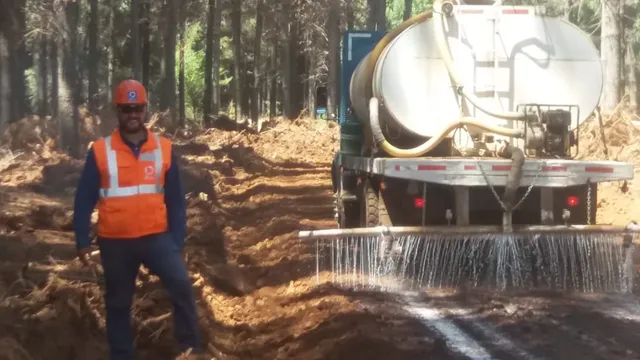
DMS-DS 100®
Soil stabilization for roads.
DMS-EB®
Bituminous emulsion.
CHEM-STAB®
Ionic soil stabilizer.
Eziss Pro
Natural stabilizing enzyme.
SOILCELLS®
Geocells for stabilization.
Each sheet reproduces the technical text published by ABCDust. Dosage and soil compatibility are confirmed with the technical team for each site.