
Wind panels · Passive barrier
DMS-WF 36® wind fence: passive wind and dust control
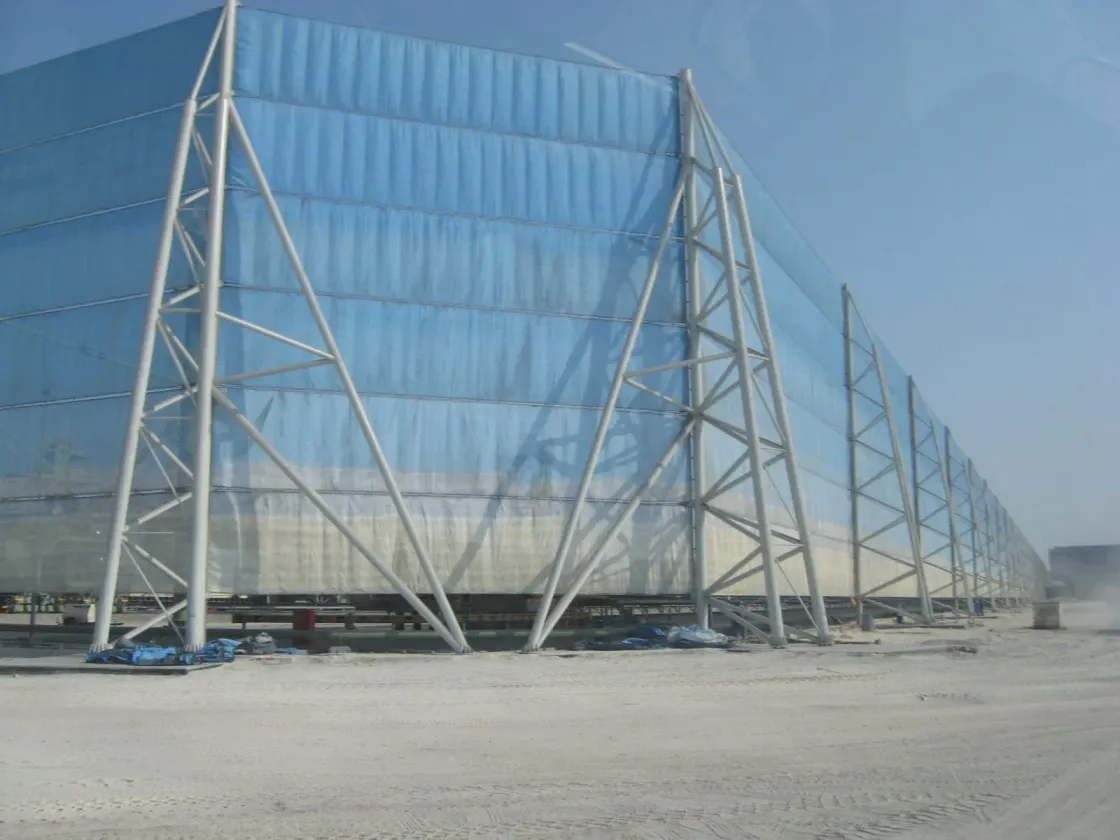
A modular, durable, water-free barrier for mining, industrial and sensitive areas: it cuts wind speed by 60–70% and keeps dust where it belongs.
- wind speed reduction
- 60–70%
- PM10 reduction
- 77.8%
- maximum height
- 30 m
- rated wind resistance
- 160 km/h
- of water or chemicals needed
- 0 L
Figures from ABCDust’s technical brochure (maximum height: 2026 product data). Results depend on each site’s wind, layout and dust sources.
At a glance
- Material
- UV-resistant high-density polyethylene (HDPE)
- Maximum height
- up to 30 m
- Fabric weight
- 180–230 g/m²
- Operating temperature
- −35 °C to +40 °C
- Aerodynamic porosity
- 10–25%
- Wind speed reduction
- 60–70%
- Wind resistance
- up to 160 km/h (100 mph)
- Support cables
- stainless steel
- Fastening system
- heavy-duty snap clips
- Maintenance
- low, with maintenance manuals included
- Panel sizes
- fully customizable
Data from ABCDust’s DMS-WF 36® technical brochure; maximum height from ABCDust’s 2026 product data.
Request the full technical sheet
The problem
Where does your dust come from?
We start every project with three questions:
- What are the main sources of dust on your site?
- How are they measured?
- How should they be managed?
On mining and industrial sites, wind picks up dust from every stage of the process and carries it to work areas, equipment and nearby communities.
- Hauling
- ±40%
- Crushing
- ±35%
- Loading
- ±10%
- Slopes and tailings
- ±10%
- Blasting
- ±5%
- Stockpiling
- ±5%
Indicative shares, each one approximate (±). They vary by site and operation.
Wind lifts dust off stockpiles, slopes and tailings, and carries away the dust the operation itself raises. Reduce the wind near the surface, and you reduce both erosion and how far the dust travels.
How it works
An aerodynamic barrier that works without water or chemicals
DMS-WF 36® is ABCDust’s answer to wind-driven dust: a passive barrier that controls the wind itself. It works around the clock with no water, no chemicals and no energy use.
The panels are made of UV-resistant HDPE fabric with an aerodynamic porosity of 10–25%. A solid wall pushes the wind over the top and creates turbulence behind it. The porous fabric lets a controlled flow of air through, creating a calm, sheltered zone downwind where particles stay on the ground instead of being lifted and carried away.
Performance according to the technical brochure
| Result | What it means for your site |
|---|---|
| 60–70%wind speed reduction | Much less energy available to lift and carry particles. |
| 77.8%PM10 reduction with the wind fence alone | Cleaner air for workers and neighbors, and easier compliance. |
| 90–95%dust control when combined with a water cannon | Near-complete control at critical points. |
| Less stockpile erosion | Less product lost to the wind, and less cleanup. |
The science
Why a porous fence beats a solid wall
It seems logical that a solid wall would stop more wind. In practice it does the opposite: the wind is deflected over the top and drops back down behind the wall as strong eddies that scour the very surface you want to protect. A porous fence lets part of the air pass through. This flow through the fabric balances the pressure on both sides and keeps the faster wind lifted away from the ground.
Solid wall
DMS-WF 36® porous fence
How wind moves dust
Large particles
Creep
Heavier grains roll and slide along the surface, pushed by the wind.
Medium particles
Saltation
Grains bounce along the ground, and each impact knocks finer particles loose into the air.
Fine particles
Suspension
The finest dust, including PM10 and PM2.5, stays airborne and can travel far beyond the site boundary.
Slowing the wind near the surface interrupts all three. Less creep and saltation means fewer fines are released, so less dust reaches suspension in the first place.
Customization
Built to your specifications
Every site has its own wind, terrain and operating needs. DMS-WF 36® panels are configured to match them.
- Knit density (needle count) and cover factor
- To set the porosity that gives the best wind reduction for your site.
- Borders and reinforcements
- Reinforced edges with grommets, for long service life under constant wind load.
- HDPE grade and UV protection
- HDPE fabric stabilized for high-altitude sun and harsh climates.
- Dimensions
- Panel sizes made to fit your structure, height and layout.
- Colors
- To match corporate standards or reduce visual impact on the landscape.
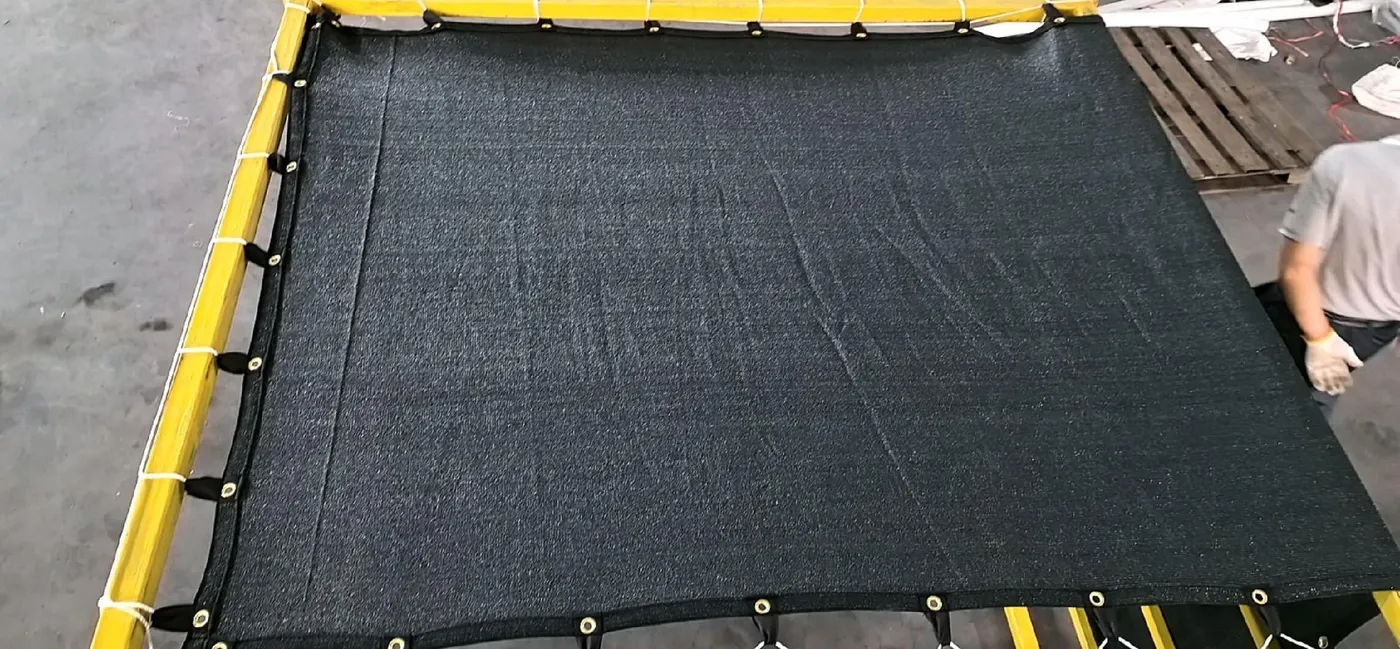
Fence fabric panel with grommets, laced to a yellow frame in a workshop. 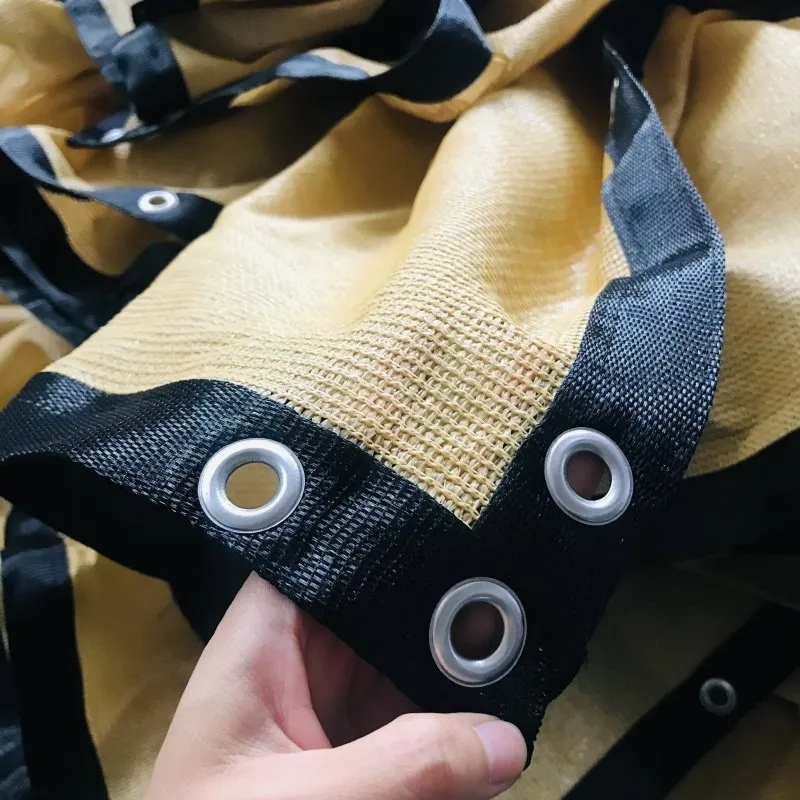
HDPE fence fabric with a reinforced black border and metal grommets. 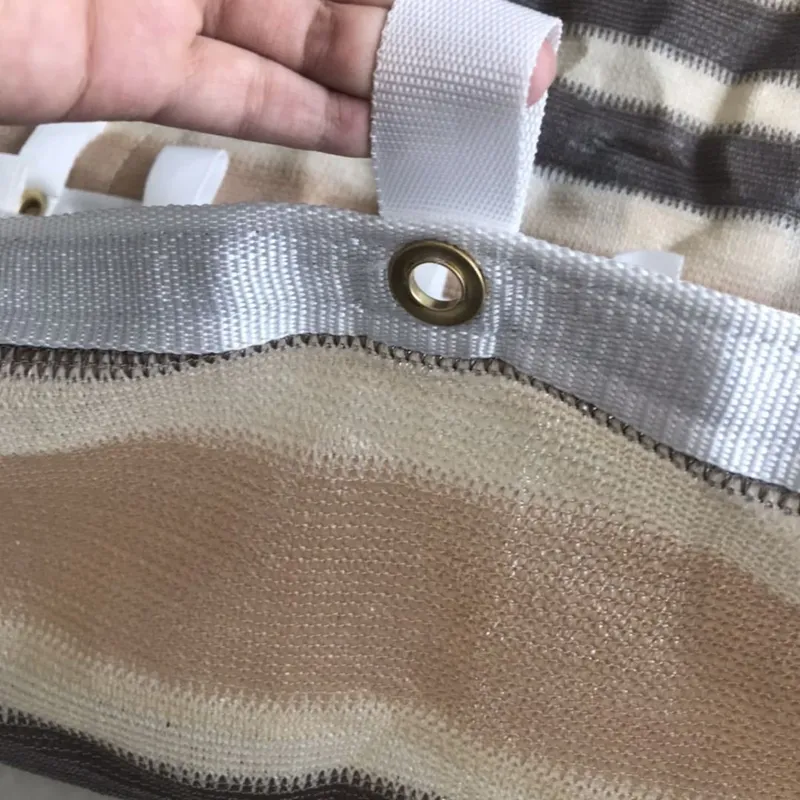
Reinforced webbing border with a grommet on a fence panel.
The system
What’s in a DMS-WF 36® system
- HDPE fabric
- UV-resistant, 180–230 g/m², with the knit density and cover factor set for your target porosity.
- Snap-clip fastening
- Heavy-duty clips hold each panel securely and make inspection and replacement quick.
- Stainless steel cables
- Support cables that tension the panels and resist corrosion in harsh environments.
- Site-specific structure
- Posts and foundations sized for your height, layout and design wind loads.
How DMS-WF 36® compares
DMS-WF 36® porous fence
- Effect on wind
- Slows it by 60–70% over a long sheltered zone
- Water use
- None
- Weight and structure
- Light fabric, fewer structural demands
- Corrosion
- HDPE fabric does not rust
- Flexibility
- Modular, removable, custom sizes
Solid wall
- Effect on wind
- Deflects it, creating turbulence behind
- Water use
- None
- Weight and structure
- Heavy, large foundations
- Corrosion
- Depends on material
- Flexibility
- Permanent
Rigid metal screen
- Effect on wind
- Slows it, but can clog and behave like a wall
- Water use
- None
- Weight and structure
- Heavy panels, more posts
- Corrosion
- Prone to rust in humid or saline air
- Flexibility
- Limited
Water spraying alone
- Effect on wind
- No effect on wind
- Water use
- Continuous, with losses to evaporation
- Weight and structure
- Pumps, piping and trucks
- Corrosion
- Can corrode equipment
- Flexibility
- Flexible, but a recurring cost
Applications
Where DMS-WF 36® makes the difference
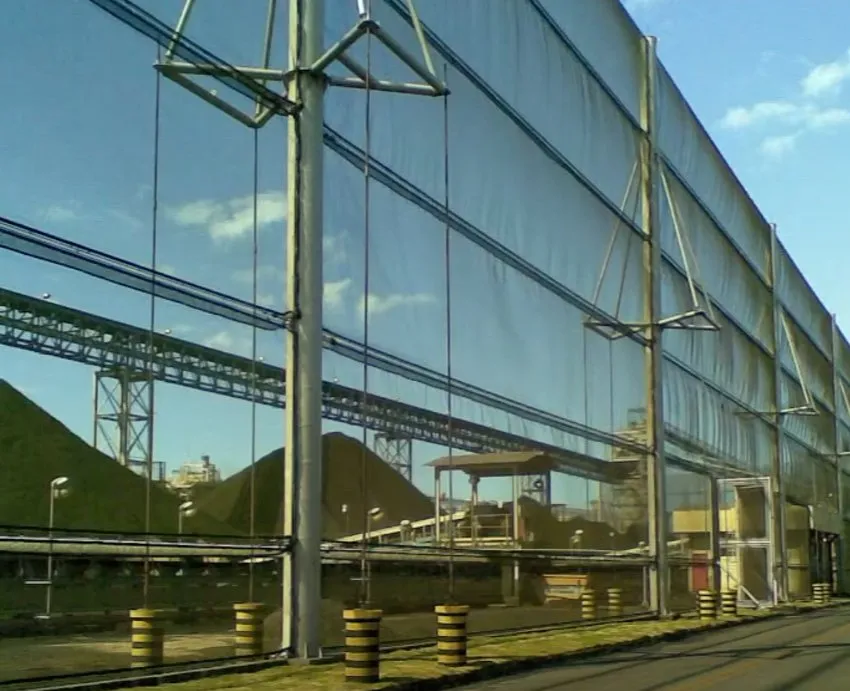
Grinding and crushing plantsKeep dust away from work areas, equipment and conveyors. 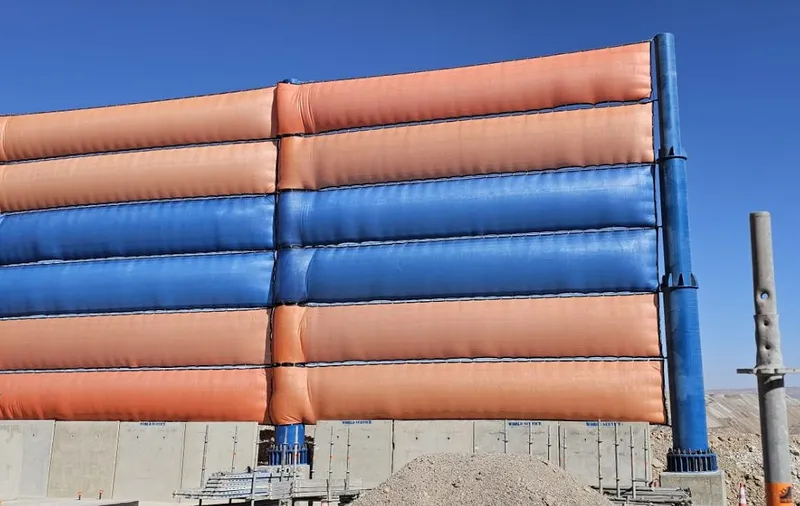
Modular installationsRelocate or extend the fence as your operation changes, in the colors you need. 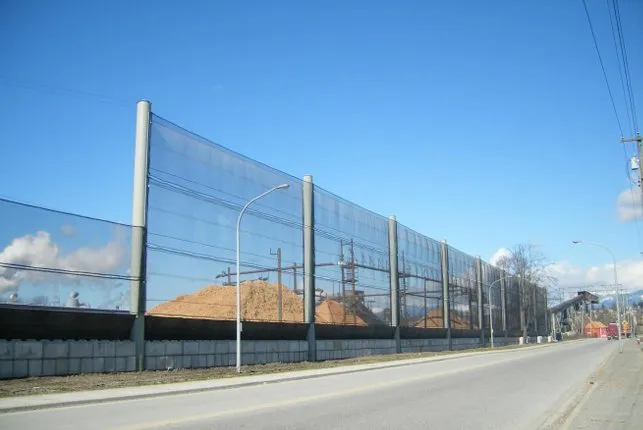
Sensitive areasSite boundaries near communities, roads, farmland or protected areas.
- Tailings dams
- Reduce dust lifted from dry beaches and slopes.
- Loading and unloading fronts
- Calm the air around high-activity points where trucks and loaders operate.
- Camps
- Protect living quarters and offices from dust carried in from the operation.
- Conveyor transfers and stackers
- Shelter material as it falls and is spread onto piles.
Industries
- Mining and minerals
- Ports and bulk terminals
- Power and biomass
- Aggregates and cement
- Solar farms
- Construction
Strategic advantages
Why operators choose DMS-WF 36®
- Up to 70% lower dust emissions
- Better air quality for workers and nearby communities.
- Fast installation
- Heavy-duty snap clips speed up assembly and panel replacement.
- Built for extreme climates
- From −35 °C to +40 °C and winds up to 160 km/h.
- No water, no chemicals
- Saves water and supports your environmental commitments.
- Modular and removable
- Customizable panels you can relocate or extend as the operation changes.
- Supports compliance
- Helps you meet air quality and environmental targets.
Integrated dust control
Even better as part of a complete system
DMS-WF 36® controls the wind. ABCDust’s other solutions take care of the rest.
- Water cannons at critical pointsDMS-Cannons®
- Combined with the fence, up to 90–95% dust control.
- Dry fog for point sourcesDMS-Fog®
- Dry fog systems for point sources such as crushers and conveyor transfers.
- Crust formerDMS-TSF®
- Seals stockpile and tailings surfaces inside the sheltered zone.
- Haul roadsDMS-DS®
- Suppressants and stabilizers for the haul roads around the protected area.
- MonitoringRed-Box®
- PM10, PM4, PM2.5 and PM1.0 monitoring to measure results before and after installation.
- Data platformDMS-ONE®
- Wind, dust and treatment data in a single platform.
Another format
HDPE mesh in rolls
Besides the DMS-WF 36® fabric, ABCDust supplies HDPE mesh in rolls for wind reduction and dust suppression. It is a different format, with its own weight and shade percentage: its figures are not those of the DMS-WF 36® fabric.
- Width
- 1.5 m
- Length
- 6–11 m
- Weight
- 135 g/m²
- Shade percentage
- 60–80% ± 5%
- Material
- HDPE
- Application
- wind reduction and dust suppression
Data from ABCDust’s HDPE mesh technical sheet.
Why ABCDust
Dust control and soil stabilization, with measured evidence
ABCDust offers a complete range of solutions and systems for dust control and monitoring in mining: dust control and soil stabilization additives, backed by application, monitoring and control systems, and production indicator analysis.
- Measured results
- Performance measured with monitoring data.
- Durability
- Materials and designs built for years of service in harsh conditions.
- R&D capabilities
- A continuous innovation pipeline, backed by our own patent and pending applications:
- 1US patent granted
- 6new patent applications filed in Canada, the US and Chile
- Cost efficiency
- Solutions that reduce water, chemicals and maintenance.
- Local presence
- Offices in Canada and Chile, and our own teams in Peru and Brazil.
Companies that work with us












Get started
Three steps to a cleaner site, sheltered from the wind
Tell us about your site
Location, dust sources to protect, prevailing wind direction and equipment access needs.
We design your fence
We study wind data, topography and existing structures to set the location, height, layout, porosity and panel options, plus any complementary treatments.
Install and measure
From design to supply and fast snap-clip installation, followed by monitoring to confirm results.
Frequently asked questions
How much can DMS-WF 36® reduce dust?
The fence reduces wind speed by 60–70%. ABCDust’s technical brochure gives a 77.8% PM10 reduction with the fence alone, and up to 90–95% dust control when it is combined with a water cannon. Results depend on your site’s wind, layout and dust sources.
Why a porous fence instead of a solid wall?
A solid wall pushes the wind over the top and creates strong turbulence behind it, which can lift dust. A 10–25% porous fence lets some air through, creating a longer and calmer sheltered zone.
How tall can the fence be?
Up to 30 m, with panel sizes customized to your structure and layout.
Will it withstand extreme weather?
Yes. It is designed for temperatures from −35 °C to +40 °C and winds up to 160 km/h (100 mph).
Does it need water or chemicals?
No. DMS-WF 36® is a passive barrier. It can be combined with water cannons or suppressants where extra control is needed.
Can it be moved as the operation changes?
Yes. The structure is modular and removable, so the fence can be extended or relocated.
How much maintenance does it need?
Very little. Panels attach with heavy-duty snap clips for easy inspection and replacement, and we provide maintenance manuals.
Talk to a dust control specialist
Share your site details and we’ll propose a starting point for your wind fence project.
Offices
Québec, Canada
2828 Boulevard Laurier, Tour 1, Suite 700, G1V 0B9
+1 (418) 263-4661Las Condes, Chile
Las Condes 10465, Of. 324 A, Floor 3
+56 2 2925 8547
Email: info@abcdust.net
Request a site assessment