
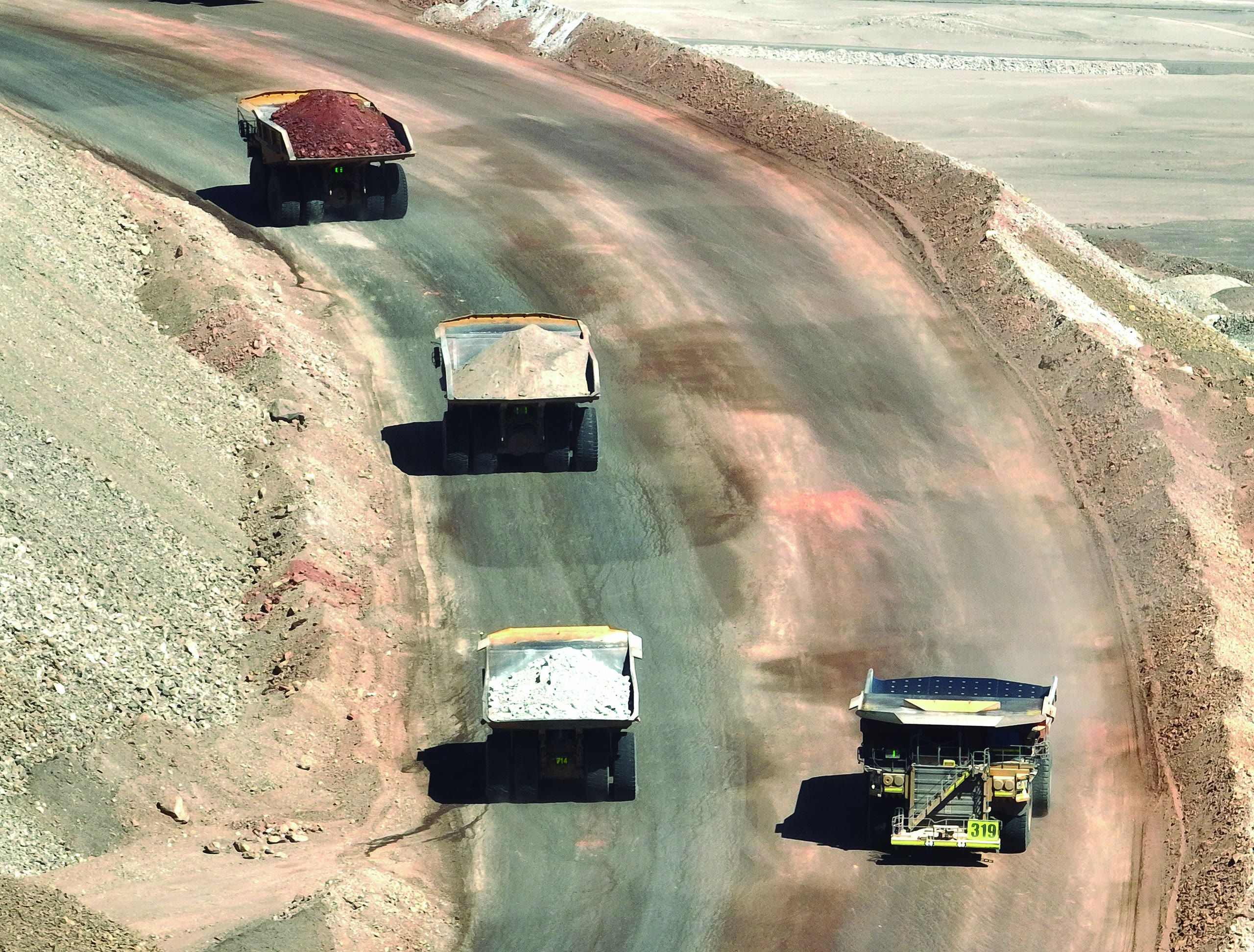
Dust suppressants
Dust suppressant additives for haul roads, loading fronts, conveyors, tailings and solar farms: nanopolymers, surfactants and an ice and dust control formula for extreme climates. We have formulations for each emission source on your site, optimized for different climates. 6 entries in this category.
Control up to 98% of PM10 and PM2.5 dust, use up to 90% less water and meet your environmental permits
Halve road maintenance and cut CO₂ emissions by 20 to 25%. DMS-DS® figures on mine ramps and haul roads.
A dust suppressant is an additive mixed into the watering or misting water so that fine material stays bound to the surface or to the ore instead of going back into the air with traffic or wind. ABCDust formulates six: for haul roads, loading fronts, conveyors, tailings and solar farms, with nanopolymers, surfactants and an ice and dust control formula for extreme climates.
Each emission source is treated differently. This sheet explains how each family works, what it replaces, how it is applied and how the result is demonstrated; the four application sheets cover each case in depth.
At a glance
- Additives in the family
- DMS-DS®, DMS-80®, DMS-90®, DMS-TDS®, DMS-TSF®, DMS-ALB®
- Formulation bases
- nanopolymers, non-ionic surfactants and crust-forming polymers
- Suppression on roads (DMS-DS®)
- 91–98% of PM10 and PM2.5
- Water savings (DMS-DS®)
- up to 90%
- Braking distance (DMS-DS®)
- 35–82% shorter than with watering alone
- Untrafficked surfaces (DMS-TSF®)
- lasts 6–24 months
- Material in motion (DMS-TDS®)
- over 85% suppression, with cannons or sprayers
- Extreme cold (DMS-80®, DMS-TSF®)
- down to −30 °C
- Application methods
- water truck, cannons, sprayers, hoses and aerial application
- Verification method
- EPA OTM 34 with TSI DustTrak 8530
- Certification (DMS-DS®)
- BNQ 2410-300, certificate no. 4192
- Packaging and shelf life
- 1,000 L IBC tote; 12 months
Source: technical data sheets for DMS-DS®, DMS-80®, DMS-TDS® and DMS-TSF®. The dose is defined for each site.
- of PM10 and PM2.5 suppressed on haul roads with DMS-DS®
- 91–98%
- less watering water with DMS-DS®
- up to 90%
- shorter braking distance than with watering alone
- 35–82%
- life of the DMS-TSF® crust on untrafficked surfaces
- 6–24 months
Why water alone is not enough
Watering with a water truck has two limits: the passes have to be repeated several times a day and, on a ramp with heavy traffic, it erodes the running surface instead of stabilizing it.
- Water alone
- The water evaporates and the dust comes back with traffic. Repeated watering erodes the running surface instead of stabilizing it.
- Water with suppressant
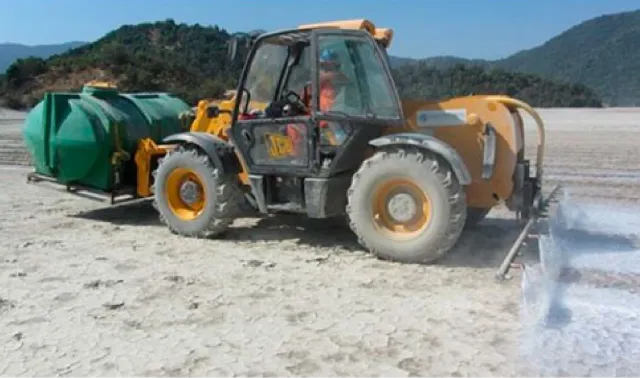
- The additive goes into the tank of the same water truck. DMS-DS® binds fine particulate matter and improves the friction of the running surface; each application adds a microlayer on top of the previous one.
What changes in the operation of a haul road with DMS-DS®:
- less watering water
- up to 90%
- the road maintenance
- half
- lower CO₂ emissions
- 20–25%
- grade, with 600 t trucks, on the test ramps
- up to 16%
Source: DMS-DS® technical data sheet.
Where the dust on a site comes from
The work starts with four questions: what the main emission sources are, how they are measured, which factors attenuate or aggravate them, and how to tackle them. As an order of magnitude, a mine's emissions break down by activity as follows:
Hauling and crushing account for most of the emissions.
How each additive family works
A road takes tires, a tailings surface takes wind, and the ore on a conveyor is in motion. Each case calls for a different mechanism.
0.25 µm
Nanopolymer film on roads
DMS-DS® binds fine particulate matter to the running surface and improves its friction. Each watering forms a microlayer on top of the previous one. It dries clear, without staining.
6–24 months
Crust on untrafficked surfaces
DMS-TSF® is a water-soluble, crust-forming polymer. Its microlayers bind the surface material, retain water and encapsulate the dust, and withstand rain, UV radiation and cold.
over 85%
Surfactant on material in motion
DMS-TDS® improves capillarity and water infiltration into the material, and binds PM2.5 and PM10 particles. Atomized, it captures fine dust that is already airborne.
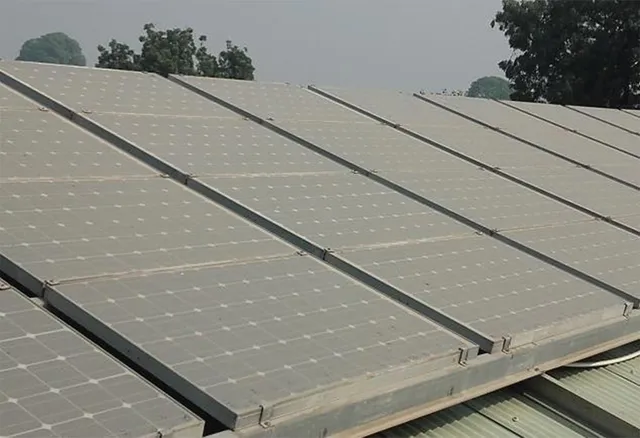
Three more formulas cover specific conditions: DMS-80®, with ultra-low chloride levels, for silty and sandy soils; DMS-90®, applied without water in winter for ice and dust control; and DMS-ALB®, which stabilizes the ground of a solar farm and provides an albedo factor of at least 80%.
Which source, which product
The catalog arranged by the emission source that needs to be controlled.
| Emission source | Additive | How it works | Data sheet figure | Application sheet |
|---|---|---|---|---|
| Haul roads and ramps | DMS-DS® | Nanopolymer that binds fines to the running surface | 91–98% of PM10 and PM2.5 | Haul roads and loading fronts |
| Mine, agricultural and industrial roads | DMS-80® | Organic polymers and nanopolymers, with ultra-low chloride levels | 85–90%; down to −30 °C | Haul roads and loading fronts |
| Loading fronts and conveyor belts | DMS-TDS® | Non-ionic surfactant, applied with cannons or sprayers | over 85% | Crushers |
| Tailings, stockpiles and berms | DMS-TSF® | Crust-forming polymer, chloride-free | 85–90%; 6–24 months | Tailings |
| Icy roads, extreme climates | DMS-90® | Ice and dust control; applied without water in winter | 85–90% | — |
| Solar farm ground | DMS-ALB® | Nanopolymers and refractory minerals; one application a year | up to 85–95%; albedo ≥ 80% | — |
| Roads that also need bearing capacity | DMS-DS 100® | Soil stabilizer with a suppressant effect | up to 85–95% | Soil stabilization |
How it is applied
The method depends on the source: traffic, an exposed surface or a fixed emission point.
- Water truck, topical applicationRoads, ramps, solar farms
- The additive is added to the truck loaded with water, mixed and sprayed onto the surface. This is the method for DMS-DS®, DMS-90® and DMS-ALB®. DMS-80® is maintained with one or two maintenance waterings a month on heavily trafficked roads and one every four months on lightly trafficked roads.
- Mixed into the soilMix-in or scarified
- DMS-DS® and DMS-90® can also be mixed into the road material, as a soil stabilizer. The details are in the soil stabilization sheet.
- Fog cannonsLoading and dumping fronts, slopes
- DMS-TDS® is applied dissolved in water with cannons or sprayer systems. With additive, the DMS-Cannons® cannon achieves 80–90% less respirable dust (PM10 and PM2.5), 10–20% more reach and 50–90% longer-lasting wetting.
- Dry fogCrushers, chutes and transfer points
- DMS-TDS® is dosed into the DMS-Fog® system. The combination reaches a suppression efficiency of 90–95%. See the crushers sheet.
- Hoses, water cannons and aerial applicationTailings, stockpiles and berms
- DMS-TSF® is applied with water trucks, hoses, water cannons or from the air (airplane or helicopter). Before a large surface is treated, the substrate is analyzed and tested in the laboratory.
- DoseBy soil type, traffic and climate
- ABCDust's technical team defines the dose for each site, according to soil type, traffic and climate.
Where it is used
Four sheets cover the problem, the product, the application method and the way the result is measured for each source.
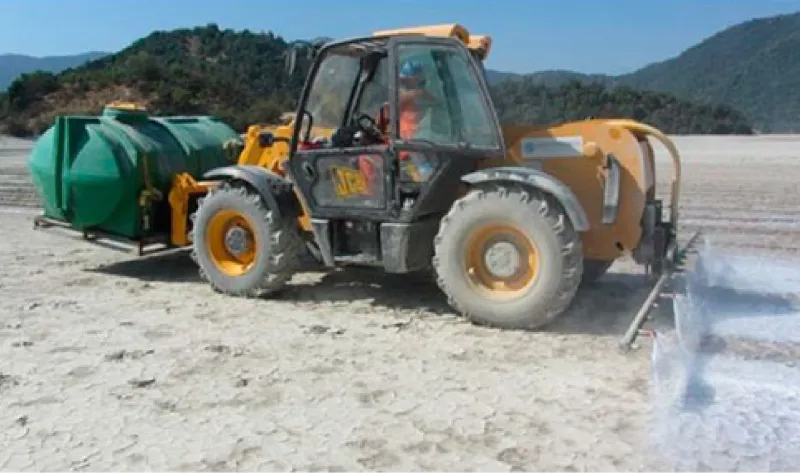
Tailings
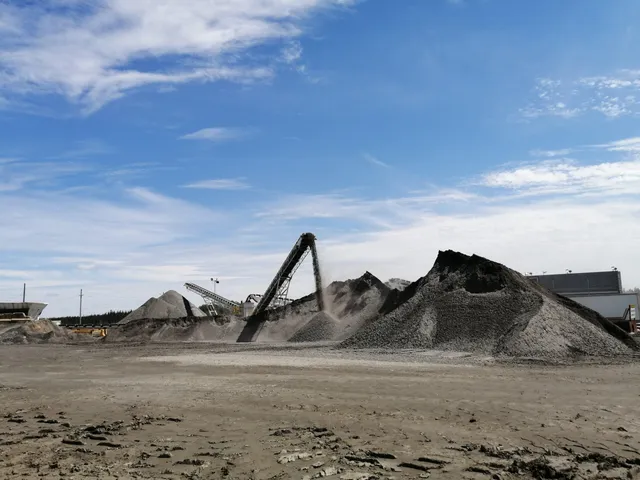
Large dry surfaces exposed to wind. They are treated with a chloride-free DMS-TSF® crust that lasts 6 to 24 months.
See the tailings sheet →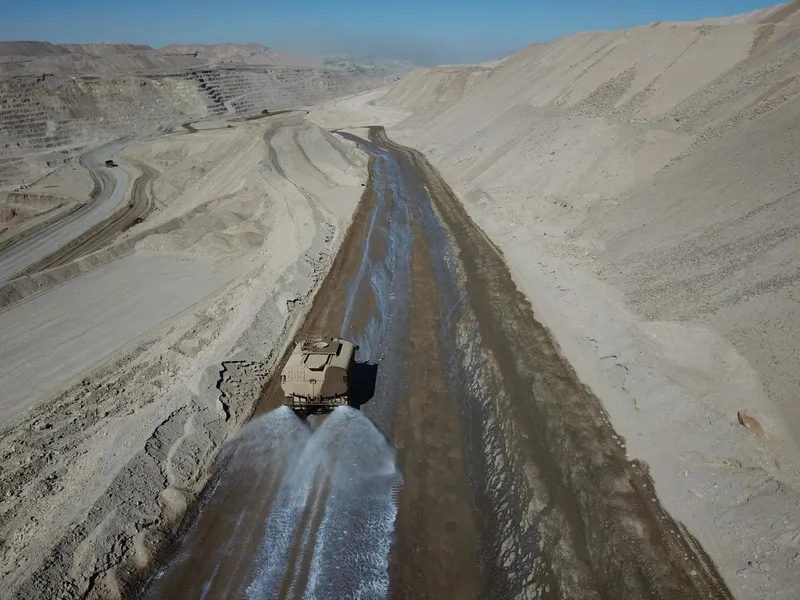
Haul roads and loading fronts
On ramps with 10 to 15% grades, dust reduces visibility and lengthens braking distance. DMS-DS® on the road; cannons with additive at the front.
See the haul roads and loading fronts sheet →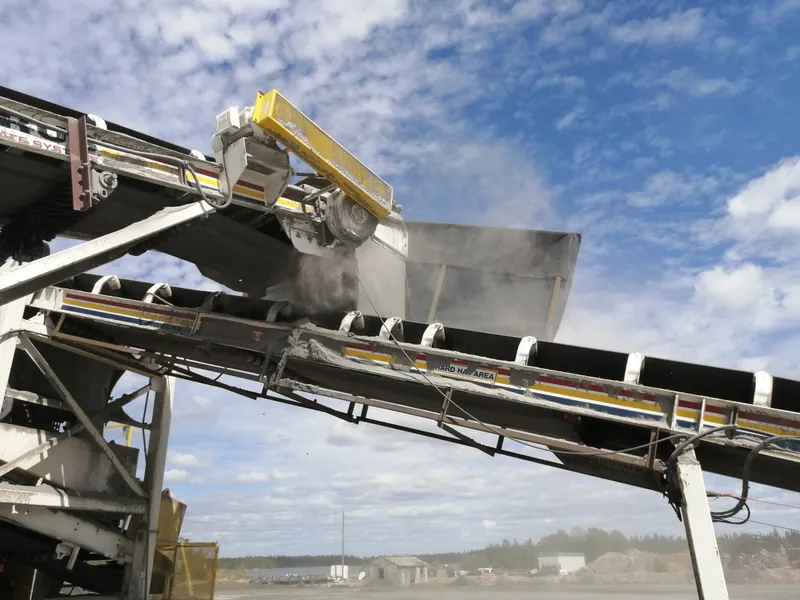
Crushers
Emissions concentrate at a few fixed points of dry, fine material. Dry fog, cannons and collectors, with DMS-TDS® as the additive.
See the crushers sheet →
Soil stabilization
When the road also needs bearing capacity: topical, short-term solutions and mixed-in, long-term ones.
See the soil stabilization sheet →
Our approach
Monitor → Treat → Optimize: how the result is demonstrated
The same method on every site: a measured baseline, treatment at the source, and verification against that same baseline. DMS-ONE® computes efficiency as (reference − measured dust) ÷ reference × 100.
- 01
Monitor
Fixed and GPS-equipped mobile sensors, cameras with computer vision, weather stations and reference gravimetric sampling. The baseline for the point is established first.
- 02
Treat
An hour-by-hour dust risk index built on the forecast, watering scheduled by road segment, an optimal route, execution through the operator app, and remote control of the equipment in the field.
- 03
Optimize
Suppression efficiency computed against the baseline, adherence to schedule, actual water and additive against plan, and road regularity. Exportable report.
EPA OTM 34
The measurement method on roads
A TSI DustTrak II 8530 monitor with the probe behind the rear tire of a pickup truck driving road sections of about 200 m at 40 km/h. The result is computed against the baseline.
Certifications and tests
Certificates and test reports for DMS-DS®.
- BNQ 2410-300Certificate no. 4192
- DMS-DS® meets BNQ 2410-300, the standard setting ecotoxicological requirements for dust suppressants on unpaved roads. Certificate valid from April 11, 2025 to April 30, 2027.
- Boeing BSS7432SMI report 2605-777
- DMS-DS® tested to specification BSS7432.
- Eurofins EnvironeX2022
- Test report for DMS-DS® at 5%, downloadable from the product sheet.
- Laboratorio Nacional de Vialidad, Chile2020
- UCS test report for DMS-DS® and DMS-DS 100®, downloadable from each product sheet.
Related line
Drilling and blasting
ABCDust has a DMS-DS® line for the drill pattern and for the blast hole.
- Wetting the patternDMS-DS® with a water truck
- Applied with a water truck after drilling and before charging, without a cannon.
- DMS-CapsuleCapsule inside the hole
- A biodegradable plastic capsule filled with DMS-DS® emulsion, 100 cm long and 9 kg per unit, for a range of −20 to 45 °C. It sits inside the hole, above the stemming plug and the explosive.
- Visible dust monitoringContinuous monitoring
- Continuous monitoring that generates visible-dust alarms and reports, and measures blast dust.
- Effectiveness
- 80–90% dust suppression and 90% less visible plume.
What we are asked most
Does the suppressant replace the water truck?
No. The additive goes into the tank of the same truck and is sprayed with it. What changes is the watering frequency: DMS-DS® cuts water consumption by up to 90%.
Do they contain chlorides, or are they corrosive?
DMS-TSF® contains no chlorides. DMS-80® has ultra-low chloride levels, is non-corrosive and does not increase the salinity of the soil or of nearby water bodies. DMS-DS® is non-toxic, non-corrosive and non-ionic, and meets the BNQ 2410-300 standard (certificate no. 4192).
How long does a treatment last?
It depends on the source. On untrafficked surfaces, the DMS-TSF® crust lasts 6 to 24 months. On roads, DMS-80® is maintained with one or two waterings a month under heavy traffic and one every four months under light traffic. On solar farms, DMS-ALB® needs one application a year.
Do they work in cold, rain or acidic water?
DMS-80® and DMS-TSF® are compatible with cold down to −30 °C, and DMS-90® is applied without water in winter for ice and dust control. DMS-DS® is resistant to water, UV radiation, and acidic and alkaline water.
How is effectiveness demonstrated?
With a baseline measured before treatment and the same measurement afterwards. On roads, a TSI DustTrak 8530 monitor is used under the EPA OTM 34 method. Efficiency is computed against the baseline and recorded by sector in DMS-ONE®.
Tell us the emission source, the area or the kilometers, and the climate
With that we propose the additive, the application method and the baseline against which the result will be measured on your site.
Request a suppressant assessment for your site
Each sheet reproduces the technical text published by ABCDust. Dosage and soil compatibility are confirmed with the technical team for each site.